










Breaking News
 Amazon Boeing Plane Bursts Into Flames After it Overshoots Runway at Miami International Airpot
 Trump grants clemency to 30 people, White House pardon czar says
 Bessent: "CUT THE SNAKE'S HEAD OFF"--But Who is the Real Target?
 Special LIVE Saturday Show: Could The Gov Seize XRP After Chilling FDIC Admission? Gas Prices...
Top Tech News
 Floating data center would provide water and electricity to 32,000 homes
 OpenAI Cuts Off Elon's Cursor, Humanity's First Star Probe, and Trump's Nuclear Mars Shi
 Eating pollution? Plastic-to-cookie technology raises safety, environmental concerns
 Ford's $30,000 Fathom EV Truck Appears More Conventional Than Expected
 Berlin-based artist Simon Weckert explored that idea with Digital Camouflage...
 Tether expands tokenization business into Saudi Arabia, starting with real estate
 Ukraine is facing a new problem in its war with Russia:
 It charges more than it discharges while driving
 Dataminr AI tech to go live on NATO Maven system: CEO
  The Most Dangerous Interview Ever Recorded? PART 2


Solid-State Batteries Are In 'Trailblazer' Mode. What's Holding Them Up?
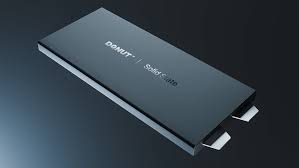
For almost two decades, solid-state batteries have been hailed as the game-changer for electric vehicles. A breakthrough that promises to eliminate range anxiety, slash charging times and make electric cars as practical and convenient as gas-powered ones—without the nasty tailpipe emissions that pollute the air and harm human health.
And yet, solid-state batteries have felt like they've been trapped in the lab. So what's holding them back? How close are they to powering EVs? Are they even real, or will this technology always be science fiction?
Experts told InsideEVs that solid-state battery progress isn't as sluggish as it seems. Companies are closer than ever to commercialization, but hurdles remain. Just like lithium-ion batteries, their build-out is expected to be slow and gradual. Semi-solid-state batteries are set to hit the market first, serving as a "bridge technology" before fully solid-state packs reach mass production.
"We're in the mode of trailblazing the breakthroughs to move them closer to automotive applications," Siyu Huang, the CEO of battery startup Factorial told InsideEVs. "The main challenge for solid-state is scalability," she added—the ability to produce them in mass quantities.
How This Works
In a traditional lithium-ion cell, the electrolyte—the material that carries the charge-carrying ions between the charging and discharging cycles—is typically a lithium-based liquid chemical. Solid-state batteries swap that out for a solid electrolyte, often made of polymer, sulfides or oxides. The goal remains the same: shuttling electrons between the cathode and anode to power the vehicle.
Research has shown that this switch brings key advantages. Solid-state batteries pack more energy into a smaller space; they're faster charging while also being safer and delivering better thermal stability than traditional lithium-ion batteries. In theory, this should eliminate many common and troubling problems with EVs: range losses in extreme temperatures, fire risks and more.
Semi-solid state batteries, on the other hand, use a gel-like electrolyte instead of a fully liquid or solid one, offering better energy density and safety. They're a hybrid solution between conventional lithium-ion and all solid-state batteries.
Now, there's a massive push to bring both these battery chemistries to life. Huang's Massachusetts-based Factorial is among the leaders in this space. It has entered into joint development agreements with Mercedes-Benz, Stellantis and the Hyundai Motor Group (which may even reveal its own solid-state prototypes next month, according to reports.)
Several other players are also racing to develop this tech. California-based QuantumScape has an agreement with Volkswagen Group's battery subsidiary PowerCo to industrialize solid-state batteries. The BMW Group and Ford have invested millions of dollars in Colorado-based Solid Power. And Toyota and Honda are leading their own in-house solid-state battery development efforts in Japan.