










Breaking News
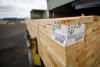 How a Tree Becomes Lumber
 Elon is not ok...
 Ike and JFK Were Right … and It Matters Tremendously Today
 THIS PRODUCT'S Skyrocketing Cost Proves Economic Collapse Is Imminent! w/ Larry Johnson
Top Tech News
 Elon Vows AI-Made 'Odyssey' After Blasting Nolan's Take On Homer
 Anthropic is launching its own drug discovery programs for rare diseases using Claude...
 SpaceX AI Satellites Will Have 250 Kilowatts of Power
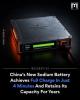 Chinese researchers have developed a sodium-metal battery that can fully charge in just 4 minutes...
 SpaceX Starship Flight 13 in 3 Days - Thursday July 13
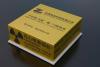 Chinese Scientists Develop Nuclear Battery Using Carbon-14
 Teleoperated humanoid robots complete first-ever live surgery
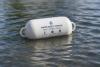 Floating capsule auto-disinfects water without chemicals or battery
 Modular Reactors To Solve Data Center Hysteria?
 DeepSeek Developing In-House AI Chip In Bid To Cut Nvidia Reliance



World's most powerful hypergravity machine is 1,900X stronger than Earth
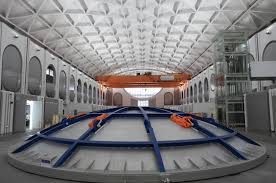
Built by Shanghai Electric Nuclear Power Group as part of China's Centrifugal Hypergravity and Interdisciplinary Experiment Facility (CHIEF), CHIEF1900 will soon function at 1,900 g-tonnes, surpassing the previously most powerful centrifuge the CHIEF1300.
"We aim to create experimental environments that span milliseconds to tens of thousands of years, and atomic to [kilometer] scales – under normal or extreme conditions of temperature and pressure," Chen Yunmin, CHIEF's chief scientist and a professor at Zhejiang University, told South China Morning Post. "It gives us the chance to discover entirely new phenomena or theories."
We first reported on the facility in 2024, when the scale of the project was unveiled, but with only the preliminary machinery in place. The impressive CHIEF1300 came online in September 2025, with the ability to generate up to 1,300 g-tonnes of hypergravity. The new centrifuge is about 46% more extreme in its capacity.