










Breaking News
 Announcement! OuterrNet Communication Available For Free: Join The Revolution!
 What Are the Differences Between Yellow Chicken and White Chicken?
 Holy SH*T! He Can't Be Serious!!!!
 THEY PASSED IT in Less Than 24 Hours:: The New Banking Rule Starts Monday. (Alert);
Top Tech News
 Superheat Unveils the H1: A Revolutionary Bitcoin-Mining Water Heater at CES 2026
 World's most powerful hypergravity machine is 1,900X stronger than Earth
 New battery idea gets lots of power out of unusual sulfur chemistry
 Anti-Aging Drug Regrows Knee Cartilage in Major Breakthrough That Could End Knee Replacements
 Scientists say recent advances in Quantum Entanglement...
 Solid-State Batteries Are In 'Trailblazer' Mode. What's Holding Them Up?
 US Farmers Began Using Chemical Fertilizer After WW2. Comfrey Is a Natural Super Fertilizer
 Kawasaki's four-legged robot-horse vehicle is going into production
 The First Production All-Solid-State Battery Is Here, And It Promises 5-Minute Charging
 Storage doesn't get much cheaper than this


Stolen Soil and Corporate Welfare: The Global Scam of 'Feeding the World'
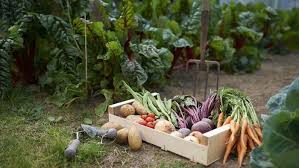
Across the world, food systems praised for their productivity now deliver an abundance of calories alongside widespread micronutrient deficiency, ecological collapse and rural precarity.
This is the outcome of an agricultural model that equates food security with yield and mass production with nourishment. Sustained by billions in subsidies, industrial agriculture increasingly resembles a welfare state for agribusiness and retail giants whose profits depend on public money.
Nutritional decline
Corporate-driven industrial agriculture claims to feed the world but too often delivers empty calories while starving populations of nutrients. Consider that high-yield rice produces empty calories while becoming nutritionally impoverished. Since the 1960s, the concentration of zinc and iron in wheat and rice in India has fallen by 30 to 45%. In contrast, millets and pulses deliver far higher levels of protein, zinc and iron per square inch.
This is not unique to India: Rothamsted Research in the UK has evaluated the mineral concentration of archived wheat grain and soil samples from the Broadbalk Wheat Experiment. The experiment began in 1843, and their findings show significant decreasing trends in the concentrations of zinc, copper, iron and magnesium in wheat grain since the 1960s.
At the same time, nutritionally dense millet acreage in India has declined by 60% over the last seven decades. The decline is a result of structural shifts in Indian agriculture following the Green Revolution.
In the UK, the logic is similar, albeit expressed differently. Ultra-processed foods dominate, monocultures deplete soil and calories are abundant while nutrition is undermined. Obesity coexists with micronutrient deficiencies; grass-fed livestock and diverse rotations have largely been replaced by input-intensive systems, while supermarkets dictate production priorities and shape farming.