










Breaking News
 Tucker's Brother Buckley Carlson on Dogs, Childhood, Nicotine, Frank Luntz and America's...
 Rumble introduces crypto wallet with Tether, allowing tips in BTC, USDT, XAUT
 Stolen Soil and Corporate Welfare: The Global Scam of 'Feeding the World'
 Maduro on Trial & Trump's 'Donroe Doctrine'
Top Tech News
 Superheat Unveils the H1: A Revolutionary Bitcoin-Mining Water Heater at CES 2026
 World's most powerful hypergravity machine is 1,900X stronger than Earth
 New battery idea gets lots of power out of unusual sulfur chemistry
 Anti-Aging Drug Regrows Knee Cartilage in Major Breakthrough That Could End Knee Replacements
 Scientists say recent advances in Quantum Entanglement...
 Solid-State Batteries Are In 'Trailblazer' Mode. What's Holding Them Up?
 US Farmers Began Using Chemical Fertilizer After WW2. Comfrey Is a Natural Super Fertilizer
 Kawasaki's four-legged robot-horse vehicle is going into production
 The First Production All-Solid-State Battery Is Here, And It Promises 5-Minute Charging
 Storage doesn't get much cheaper than this


Is Trump Unleashing a War for Oil?
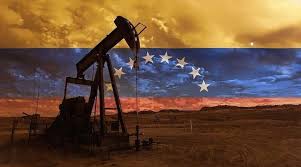
In his press conference on January 3 concerning the arrest of Venezuelan "narco-dictator" Nicolas Maduro, President Donald Trump talked about US oil companies restoring the former productivity of Venezuela's oil industry and using that money for 1) compensation for the nationalization of the industry a couple decades ago; and, 2) (somehow) benefiting the people of Venezuela.
First, regarding the fall in the productivity of Venezuela's oil industry, production fell from a peak of 3 million barrels a day twenty years ago to less than half a million barrels a day recently.
This fall in oil production reflects the long-term effects of the nationalization of the industry. When he nationalized the industry, Hugo Chavez looked at Venezuela's oil industry as a source of funds to provide relatively generous welfare benefits to the urban poor of the country, assuring that he would win re-election.
As a consequence of these welfare benefits, millions of Venezuelans stopped working and many made their way from the rural areas of the country to Caracas and other urban centers. In addition, many non-oil businesses were also nationalized, and price controls were imposed on many products. The economy became quite dysfunctional with shortages, rampant inflation, and a black market in Venezuelan currency. For example, Venezuela no longer was able to feed itself. Not a problem, thought the government. Use the proceeds of the nationalized oil industry to import food.
The impact of the collapse of the economy can be seen in the following chart. GDP per capita—once among the highest in Latin America—fell to below $2,000 in 2020, one of the lowest in Latin America and arguably relegated the country to low-income status that year. The figure has recovered a bit recently.
A periodic social survey conducted by the Andrés Bello Catholic University of Venezuela gives us a sense of the extent of poverty in the country. In the survey, "poverty" and "extreme poverty" are defined in terms of diet, housing, and other living conditions. At its worst, 90 percent of the population was living in poverty, and 70 percent in extreme poverty. Even though there has been some recent improvement in these numbers, the extent of poverty in Venezuela remains scary.