










Breaking News
 Tucker's Brother Buckley Carlson on Dogs, Childhood, Nicotine, Frank Luntz and America's...
 Rumble introduces crypto wallet with Tether, allowing tips in BTC, USDT, XAUT
 Stolen Soil and Corporate Welfare: The Global Scam of 'Feeding the World'
 Maduro on Trial & Trump's 'Donroe Doctrine'
Top Tech News
 Superheat Unveils the H1: A Revolutionary Bitcoin-Mining Water Heater at CES 2026
 World's most powerful hypergravity machine is 1,900X stronger than Earth
 New battery idea gets lots of power out of unusual sulfur chemistry
 Anti-Aging Drug Regrows Knee Cartilage in Major Breakthrough That Could End Knee Replacements
 Scientists say recent advances in Quantum Entanglement...
 Solid-State Batteries Are In 'Trailblazer' Mode. What's Holding Them Up?
 US Farmers Began Using Chemical Fertilizer After WW2. Comfrey Is a Natural Super Fertilizer
 Kawasaki's four-legged robot-horse vehicle is going into production
 The First Production All-Solid-State Battery Is Here, And It Promises 5-Minute Charging
 Storage doesn't get much cheaper than this


Socrates & War
ANSWER: Look. I have stated many times, this was never my intent. Some of humanity's most important breakthroughs happened completely by accident—the kind of discoveries where someone spills something, leaves a mess, or makes a mistake and ends up changing the world.
Probably the most famous was the discovery of Penicillin. Alexander Fleming went on vacation in 1928 and left a dirty petri dish in the lab sink. When he returned, bacteria had grown everywhere except where mold had formed. That observation revolutionized medicine and has saved countless millions of lives.
Henri Becquerel discovered radioactivity in 1896 when he opened a drawer. He'd left uranium on top of a photographic plate with wooden crosses between them during overcast weather, and when he developed the plates, the crosses appeared—the uranium was exposing them without sunlight. This accidental finding earned him half a Nobel Prize and led to Marie Curie's groundbreaking work.
Some accidents were downright messy. Spencer Silver at 3M was trying to create a super-strong adhesive in 1968 but accidentally made a weak one that could be easily removed—it seemed like a failure until someone realized it was perfect for Post-it Notes
The list goes on an on. But while this maybe a discovery of great importance, it has also been my curse. They have done everything to me from trying to kill me to throwing me in civil contempt without any explanation completely against everything in the Constitution denied a trial under the pretense it was "civil" and not "criminal."
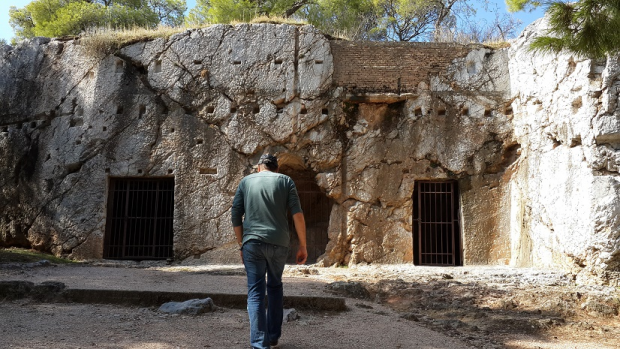
Socrates was my inspiration. I paid my respects to the jail cell in Athens where they imprisoned Socrates for also standing by his convictions. His fearlessness in the face of death is one of the most powerful themes in the Apology. His reasoning is remarkable.
Socrates argued that when performing an action, the only relevant question is whether one is acting justly or not—considerations of life and death are selfish and unimportant next to considerations of justice. He compared his philosophical calling to a soldier's duty: just as a good soldier shouldn't abandon his post in battle even at the risk of death, he couldn't abandon his post as a truth-seeker.
His central argument was that fear of death is just another kind of false wisdom, of claiming to know the unknowable. Since no one actually knows what death is, fearing it presumes knowledge we don't have. Socrates then offered what's essentially a win-win scenario. Death is either a state of nothingness—like a peaceful, restful sleep. How many of us have such a wonderful night not to be awakened by a dream. Or it's a migration of the soul where he could meet all his great friends and figures from the past to engage in a conversation about wisdom. Either way, he saw no reason to fear it.