










Breaking News
 "Power That Goes Unpunished Only Learns One Lesson: It Can Do Whatever It Wants..."
 Japan To Resume Operations At World's Largest Nuclear Plant 15 Years After Fukushima Disaster
 State Department Recalls 29 Biden-Appointed Ambassadors
 Holy Awakening Gains Momentum As Biblical 'David' Film Soars At Box Office
Top Tech News
 Perfect Aircrete, Kitchen Ingredients.
 Futuristic pixel-raising display lets you feel what's onscreen
 Cutting-Edge Facility Generates Pure Water and Hydrogen Fuel from Seawater for Mere Pennies
 This tiny dev board is packed with features for ambitious makers
 Scientists Discover Gel to Regrow Tooth Enamel
 Vitamin C and Dandelion Root Killing Cancer Cells -- as Former CDC Director Calls for COVID-19...
 Galactic Brain: US firm plans space-based data centers, power grid to challenge China
 A microbial cleanup for glyphosate just earned a patent. Here's why that matters
 Japan Breaks Internet Speed Record with 5 Million Times Faster Data Transfer
 Advanced Propulsion Resources Part 1 of 2


CDC to end animal testing in groundbreaking decision that will impact hundreds of experiments
An HHS spokesperson exclusively told the Daily Mail that the affected research is 'long-term basic research,' driven by scientific curiosity to understand core principles, such as the causes of Alzheimer's or new surgical techniques, rather than by specific product development.
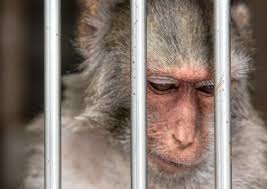
According to a plan shared exclusively with the Daily Mail, any research involving non-human primates (NHP) will be halted, and for any experiments already underway, the CDC must now determine how to end them as quickly and ethically as possible.
The CDC must evaluate every monkey in its care to determine which are healthy enough for sanctuary relocation. The agency had about 500 primates in 2006, though current totals are unclear. The Trump administration did not detail plans for animals too sick to be relocated.
The CDC must also establish a rigorous vetting process for potential sanctuaries, estimate relocation costs, and ensure the facilities are of high quality. The administration did not name the specific sanctuaries, though at least 10 exist in the US.
Since this process will take some time, the CDC must use the best possible methods to minimize any pain, distress, or discomfort for the monkeys still in their temporary care, according to the outline of the plan.
The CDC will also develop a separate plan to reduce the overall number of animals it uses for research and ensure that the research involving animals 'is directly aligned with CDC's mission,' which is stated to be to safeguard the health of all Americans by driving progress through science, technology and innovation.
NHPs represent a small proportion, estimated at half of one percent, of all the animals used in US biomedical research. The vast majority of animal testing, about 95 percent, involves mice and rats, which are not affected by this policy change.
The newest directive only affects CDC labs. It does not touch the hundreds of NIH-funded institutions that test on animals in medical research.
NHPs encompass macaques, marmosets, baboons, African green monkeys and squirrel monkeys, primarily for neuroscience, HIV/AIDS research, immunology and vaccine development due to their biological similarities to humans.