










Breaking News
 The AI Bird-Flu Scenario They Just Published
 Japan's first robot ambulance works the 9-1-1 lines for humanoids
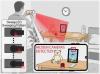 Cheap smartphone add-on pinpoints hidden cameras to shut down spies
 The $600 Tank That Beats a $10,000 Powerwall
Top Tech News
 BEYOND THE MOON: NASA plans a nuclear-powered fleet to push DEEPER into space
 Big Oil Backs Mazama's $135 Million Bet On Superhot Geothermal
 Quantum compass takes flight on Northrop's Lumberjack drone
 Terrifying AI Behavior Even Its Creators Couldn't Explain
 WW3 Near-Miss? AI Hallucinated Nuclear Weapons Components Aboard Chinese Vessel Bound For Iran
 Stripe Is Building the Toll Road for the Machine Economy
 Toyota Dakar hopeful swaps twin-turbo V6 for hydrogen fuel cells
 4-min turbo-inflatable cubic camp castle is now available in the USA
 Researchers Used Claude To Hack OpenAI Employee Accounts
 Chinese Scientists Develop New Oil Refining Method That Cuts Energy Use by 90%



Ditch the Subsidies, Grow What Actually Works

Farmers make decisions every day about what to grow, how much of it to grow, and how to grow it. Whether it's corn or cows, we look at the various incentives and punishments to decide how to proceed.
Decisions are a complicated and nuanced response to stimuli, both internal and external. Some of us really like cows. Others of us really like corn. These soul-level likes and dislikes are not subject to business or market influence. Often childhood familiarity determines whether we go with animals or plants. We tend to like knowns in our life.
Meanwhile, the food and fiber market has the same influence. One person likes beef, another tomatoes, and another milk. We might read something that makes us question a certain product. Or we may read something that makes us put it on our plate for the first time.
The market constantly ebbs and flows as information, friends, social media influencers, and personal health feelings impact purchasing decisions. The faster decisional consequences can be linked to the choices we make, the better our response. This is one reason why we have a statute of limitations for many crimes.
Decisional consequences are one of the most moral and authentic elements in both personal and societal development. When people don't suffer the consequences of poor decisions, they tend to continue down a wayward path. On the other hand, when people don't receive incentives for doing good, it thwarts development toward positive progress.
Failing to bear the costs and consequences of bad decisions is as perverse as failing to incentivize the costs and consequences of good decisions. This seems elementary enough to not even mention, but we often create public policy that seems to deny this fundamental axiom.
A case in point is federal government safety nets. Often begun with every good intention, they frequently break down after years of implementation. Government programs tend to grow more bureaucratic, becoming more interested in expanding power and budgets than in solving the problem they were chartered to solve.
When President Franklin D. Roosevelt froze wages, businesses sought new incentives for employees and opted for health insurance. Once health care market decisions left the individual level, the short chain between choice and consequence elongated. Eventually, this morphed into the Affordable Care Act that is now widely regarded as creating more problems than it started.
The local one-room, community-funded, and controlled school house gave way to state programs and eventually a federal program. "No Child Left Behind" now leaves some 46 percent of children left behind in reading based on current standardized tests. The safety net of public education is now widely regarded as inferior to private, charter, and homeschooling.