










Breaking News
 The Prime Directive is Evil
 Don't Worry About Bitcoin
 MELANIA, the film, exclusively in theaters worldwide on January 30th, 2026.
 Hospitals murdered COVID patients. The more they killed, the more money they made.
Top Tech News
 This tiny dev board is packed with features for ambitious makers
 Scientists Discover Gel to Regrow Tooth Enamel
 Vitamin C and Dandelion Root Killing Cancer Cells -- as Former CDC Director Calls for COVID-19...
 Galactic Brain: US firm plans space-based data centers, power grid to challenge China
 A microbial cleanup for glyphosate just earned a patent. Here's why that matters
 Japan Breaks Internet Speed Record with 5 Million Times Faster Data Transfer
 Advanced Propulsion Resources Part 1 of 2
 PulsarFusion a forward-thinking UK aerospace company, is pushing the boundaries of space travel...
 Dinky little laser box throws big-screen entertainment from inches away
 'World's first' sodium-ion flashlight shines bright even at -40 ºF



The Map Is Not the Territory: Ukraine, Manufactured Consent, and Europe's War of Attrition
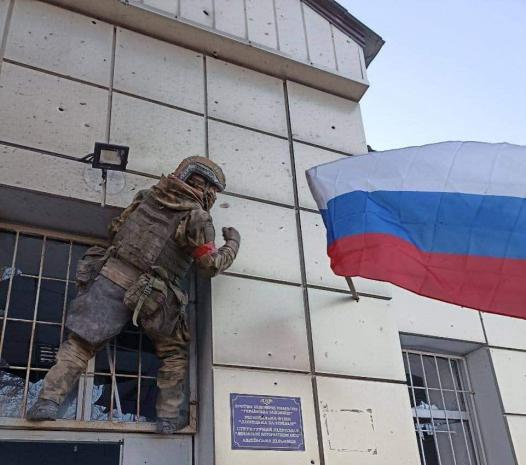
But this is not a battlefield report. It is narrative management, timed precisely to negotiations in Berlin. Kupyansk is not Stalingrad. It is not Kursk. It is not even a decisive urban fight. It is a ruined settlement on the Oskol, a former logistics node reduced to rubble, where control is measured not in flags but in fire control, drone dominance, and whether men can be rotated without being killed.
And when even Reuters couches claims as "unverified," you know what that means. When it hedges, pauses, and inserts distance between claims and confirmation, it is signaling that fog is being weaponised. What exists on the ground is block-by-block ruin fighting, contested neighbourhoods like Yubileynyy, clashes near Mirovoye and Radkovka, infiltration attempts, temporary interdictions. Battalion-scale collisions between exhausted units in a place that barely functions as a a glorified town.
The unit scale tells the truth the headlines obscure. Kupyansk has never hosted a force capable of deciding a front. Within the urban core, the Russian presence has been limited and exposed, with little time to dig in deeper, the town's ruins making sustained fortification difficult, relying on fire control rather than secured occupation. With thousands tied down protecting the flanks and barely a battalion inside the city itself, Ukrainian assaults are not sweeping counteroffensives but concentrated pushes by swarms of worn formations, often built from forcibly mobilised men with minimal training, starving and thin on ammunition, cannibalized from fronts like Sumy, and thrown into an urban graveyard to manufacture leverage.
This is not manoeuvre warfare. It is attritional contact deliberately framed as momentum to serve a media and political narrative rather operational gain. What matters is that the map is not the territory. In this war, a coloured overlay often marks a brief window of drone interdiction, hours, not control. Fire control can deny movement, but without sustainment it cannot secure ground. Fire control without sustainment does not produce breakthroughs. It produces graveyards. Ukraine has been forced by its Western patrons into too many of them already.
Kupyansk does not change the war unless it becomes part of a broader operational rollback and it won't. Otherwise, it is a bad PR bargaining chip, paid for in blood.
While cameras fixate on Kupyansk, the real pressure story runs elsewhere, across a widening arc Western coverage fragments to prevent pattern recognition. West of Russian liberated Seversk, claims and denials continue, but the geometry is clear: Ukrainian forces are stretched thin, defending ground without strategic depth. Around encircled Lyman, the contest is about lines of communication and Ukranian reserve erosion, not symbolism.
Central to the Donbass arc, Pokrovsk and Mirnograd matter not because of names, but because they anchor logistics. Russian control here forces a stark contrast in how the war is being fought. Ukraine is expending irreplaceable manpower to manufacture moments, brief tactical actions designed to win optics for a day. Russia, by contrast, is trading space, fire control, and logistics denial for outcomes that compound over time. One side is managing headlines. The other is managing the war.
To the south, the picture is more dangerous still. Around Gulyaypole, pressure is persistent and cumulative, not theatrical. And beyond it lies the real anxiety Europe refuses to discuss openly, the slow, grinding push toward Zaporozhye city. This is not a sprint. It is a methodical march Westward. If current trends hold, Zaporozhye can be operationally threatened, even encircled in less than six months. That outcome would dwarf any skirmish in the small town of Kupyansk.
This is where time asymmetry becomes decisive. Russia is fighting a time-positive war: industrial scaling and real capacity that dwarfs the fiat, paper-tiger illusory capacity of NATO; deep manpower reserves; and a level of internal cohesion sufficient to sustain a long campaign. Ukraine, by contrast, is fighting a time-negative war, with catastrophic demographic collapse, mass emigration, forced conscription, and shrinking public consent. Every Ukrainian media counteroffensive now borrows against a future that no longer exists to replenish it.
This is one of the real reasons behind Trump's push. Less sentiment. Not ideology. Geometry. Timelines. Arithmetic. Washington understands that delay only makes the endgame worse, militarily and politically for project Ukraine. Europe understands this too. But Europe cannot admit it without confessing its humiliation.