










Breaking News
 The #1 Most Dangerous Fat in the World!
 Is $140K the New Poverty Line? Is This the End of America's Middle Class?
 Here Are the NEWLY RELEASED Epstein Images Tied to Powerful Democrats
 Joe Biden Still Struggling to Raise Money for Presidential Library – No New Donations...
Top Tech News
 This tiny dev board is packed with features for ambitious makers
 Scientists Discover Gel to Regrow Tooth Enamel
 Vitamin C and Dandelion Root Killing Cancer Cells -- as Former CDC Director Calls for COVID-19...
 Galactic Brain: US firm plans space-based data centers, power grid to challenge China
 A microbial cleanup for glyphosate just earned a patent. Here's why that matters
 Japan Breaks Internet Speed Record with 5 Million Times Faster Data Transfer
 Advanced Propulsion Resources Part 1 of 2
 PulsarFusion a forward-thinking UK aerospace company, is pushing the boundaries of space travel...
 Dinky little laser box throws big-screen entertainment from inches away
 'World's first' sodium-ion flashlight shines bright even at -40 ºF



Regenerative Farming Just Went Mainstream; Here's Why It Matters
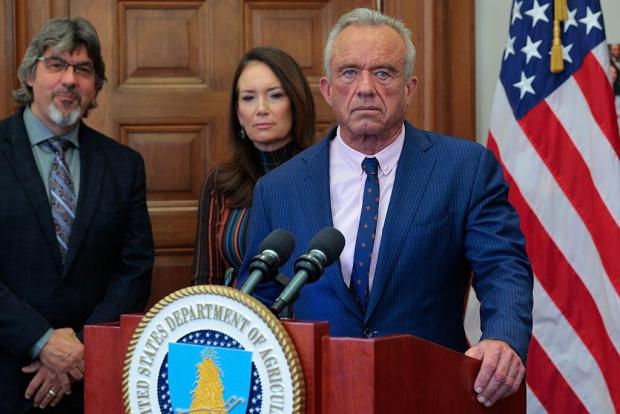
Text messages, links, alerts—people were telling me that Agriculture Secretary Brooke Rollins was about to make a major announcement on Dec. 10 related to regenerative agriculture. A YouTube link was circulating. The livestream was about to begin. There was a sense of anticipation in the air.
When the video came on, Rollins stood alongside Health Secretary Robert F. Kennedy Jr. and others. What stood out immediately was not the funding amount, but the language: soil health, human health, nutrient density, the microbiome, and microbiology. The living systems beneath our feet and within our bodies were finally being discussed as part of one connected reality.
That language matters.
Then the announcement itself came: $700 million allocated toward regenerative agriculture.
On paper, that sounds significant. In reality, when spread across acreage that is already regenerative, it comes out to roughly $16 per acre. My phone began lighting up again—this time with frustration and disappointment. Farmers were doing the math. Many compared it to the $12 billion recently allocated to soybean farmers to ease losses from China no longer buying at previous levels. The imbalance felt familiar.
I felt that disappointment myself. But I stopped.
Because the truth is, the government is not going to save us. It never was.
What matters is what was said on stage—out loud, at the highest levels of agricultural leadership. Years of pushing, educating, farming, and speaking have forced the mainstream to acknowledge that regenerative agriculture exists and that what many of us have been saying for years is not fringe, not experimental, and not untested. It is rooted in biological reality.
Not long ago, when regenerative agriculture was barely even a term, a simple Google search would return little more than my brother Ryland Engelhart's small website and the work of Allan Savory. That was essentially it. Today, regenerative agriculture is discussed in policy rooms, media, and public health conversations. That shift did not happen by accident.
As someone who has spent years pounding the pavement on small stages, podcasts, newspaper articles, Instagram posts, and anywhere else someone might listen, hearing words that could have come straight from my own mouth—or from the mouths of so many friends—spoken by the Secretary of Agriculture was a real turning point.