










Breaking News
 Why Are We Defending Mass Murder in Gaza? Because Our Greatest Ally Demands It
 The Silver Price Signal Everyone Is Missing | Mike Maloney & Alan Hibbard
 House Democrat introduces impeachment articles against RFK Jr
 Home sellers are giving up at 'unusually high rate,' says new Realtor report
Top Tech News
 Build a Greenhouse HEATER that Lasts 10-15 DAYS!
 Look at the genius idea he came up with using this tank that nobody wanted
 Latest Comet 3I Atlas Anomolies Like the Impossible 600,000 Mile Long Sunward Tail
 Tesla Just Opened Its Biggest Supercharger Station Ever--And It's Powered By Solar And Batteries
 Your body already knows how to regrow limbs. We just haven't figured out how to turn it on yet.
 We've wiretapped the gut-brain hotline to decode signals driving disease
 3D-printable concrete alternative hardens in three days, not four weeks
 Could satellite-beaming planes and airships make SpaceX's Starlink obsolete?
 First totally synthetic human brain model has been realized
 Mach-23 potato gun to shoot satellites into space


Teens May Have Come Up with a New Way to Detect, Treat Lyme Disease Using CRISPR Gene Editing
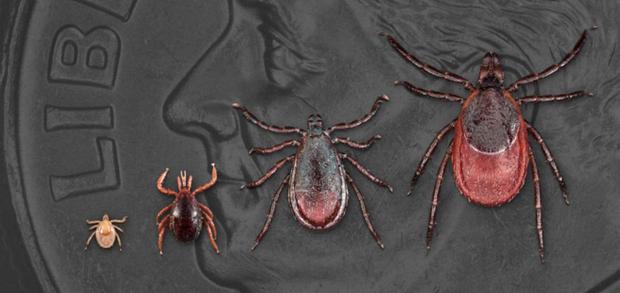
If the competition were held in the USA—where the burden of Lyme disease is debilitatingly high—maybe they would have won, but as it is, they placed highest out of 14 American high schools, and finished above 390 schools worldwide.
Called the International Genetically Engineered Machine (iGEM), the competition was held in Paris and welcomed school teams from around the world to submit projects and innovations using synthetic biology—genetic engineering and modification.
There were projects for eliminating household mold, for designing crops to grow on Mars, and eye-drops to treat cataracts, but Lambert High School in suburban Atlanta sought to combat a problem very close to home.
"One of the biggest problems with Lyme is the lack of being able to diagnose it," said Avani Karthik, a Lambert High senior and team captain of the project. "So a lotta' people will go years. Like, we've met someone who went 15 years without a diagnosis."
Lambert High is one of the highest achieving academic areas in the state of Georgia, and their big idea, which blew their teacher away with its ambition, was to create a reliable test for Lyme disease using CRISPR.
CRISPR really is one of the biggest innovations of the 21st century, and still is a full decade after it became commonly used in medical research. Using deactivated viruses to "snip" away genes, it's provided the base for ongoing cures and treatments for disease of various kinds, including the always-fatal Huntington's disease, type-1 diabetes, carbamoyl phosphate synthetase deficiency, aggressive leukemia, and more.
Karthik and her team aimed to use CRISPR as a way to identify and isolate a protein generated by the bacteria that cause Lyme disease. In a simulated model of blood infection, the team used CRISPR to target specific DNA strands where the protein hides, then gradually remove DNA material surrounding it until the protein is exposed. At this point, a simple at-home test could detect it.
The test strip showed they could detect Lyme as early as 2 days after infection—far sooner than the 2 weeks with existing tests.
Karthik led her team to Paris at the end of October. More than 400 teams, a third of them high schoolers, were competing in iGEM 2025, and despite not winning the grand prize, they finished in the top 10—the only American school to do so, and won a peripheral prize for best software tool
Many of their members put in all-nighters of coding, testing, and research to not only prepare the diagnostic tool with CRISPR, but also design a website that would present their idea—which would also be judged.
CBS News' Bill Whitaker, leading the 60 Minutes interview, encountered an environment tense with competitive spirit, something that Lambert biology teacher Kate Sharer saw, but questioned.