










Breaking News
 In my new documentary, Never in America, we pull back the curtain on one of the darkest corners...
 I just watched what they did to the King family in Washington, and I couldn't stop thinking:
 The Superfood They Turned Into a Weed: Why Is It Illegal to Grow This?
 Rep. Marjorie Taylor Greene details ''death threats directly fueled by President Trump'
Top Tech News
 Build a Greenhouse HEATER that Lasts 10-15 DAYS!
 Look at the genius idea he came up with using this tank that nobody wanted
 Latest Comet 3I Atlas Anomolies Like the Impossible 600,000 Mile Long Sunward Tail
 Tesla Just Opened Its Biggest Supercharger Station Ever--And It's Powered By Solar And Batteries
 Your body already knows how to regrow limbs. We just haven't figured out how to turn it on yet.
 We've wiretapped the gut-brain hotline to decode signals driving disease
 3D-printable concrete alternative hardens in three days, not four weeks
 Could satellite-beaming planes and airships make SpaceX's Starlink obsolete?
 First totally synthetic human brain model has been realized
 Mach-23 potato gun to shoot satellites into space


OpenAI CEO Sam Altman Pitches Eyeball-Scanning World ID to Bankers
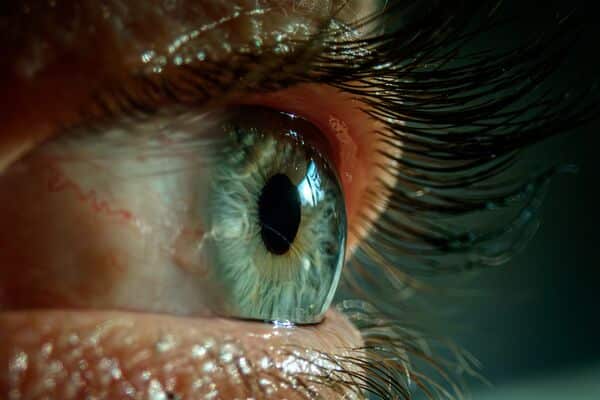
He's now turning to the financial sector to pitch World ID, a digital identity platform built on the premise that artificial intelligence has made it impossible to tell humans from machines. It's a solution aimed at solving a problem AI itself has created.
During a US Federal Reserve conference focused on banking regulation, Altman framed his biometric identity project as essential for navigating a world where digital fraud is growing rapidly.
He argued that most authentication systems have already been rendered ineffective. "AI has fully defeated most of the ways that people authenticate – all of these fancy, take a selfie, wave, or do your voice or whatever," Altman said. He added, "I am very nervous that we have a significant impending fraud crisis."
Altman's proposed remedy, of course, is World ID, a global digital identity system that uses iris scans to verify individuals and stores this verification through blockchain infrastructure.
The platform is marketed as a way to combat AI-enabled deception, particularly in financial systems that still rely on older biometric methods.
"A thing that terrifies me," he said, "is apparently there are some financial institutions that will accept the voiceprint as authentication. That is a crazy thing to still be doing. Like, AI has fully defeated that."
First reported by Biometric Update, his messaging presented AI as both unstoppable and dangerous, a force accelerating faster than most realize. He spoke enthusiastically about a future shaped by artificial intelligence, suggesting it could surpass the internet in terms of transformative power. Referencing a line often associated with nuclear optimism, he predicted "intelligence too cheap to meter" and acknowledged that while fully functional humanoid robots remain out of reach, development is moving steadily in that direction.
This vision fits squarely within Silicon Valley's familiar playbook: promote disruptive technology with fervor, normalize the disruption, then offer your own product as the only viable safeguard.
Altman's argument boils down to a stark proposition. AI has overwhelmed traditional verification tools, and only his biometric ID system can establish reliable proof of personhood.
But privacy concerns surrounding World ID are deep and unresolved. The idea of tethering one's digital identity to a biometric scan raises major questions about surveillance, data retention, and individual autonomy. Despite the privacy promises, regulators across several countries have already challenged the project on issues related to consent and disclosure, and in some cases, issued suspension orders.
In trying to soften resistance, Altman appealed to the notion that technological disruption always meets initial skepticism. He recalled how his grandfather was stunned by the calculator and how he himself reacted when Google appeared during his school years. Through these anecdotes, he framed AI's growing presence in education as part of a broader pattern in human development.