










Breaking News
 In my new documentary, Never in America, we pull back the curtain on one of the darkest corners...
 I just watched what they did to the King family in Washington, and I couldn't stop thinking:
 The Superfood They Turned Into a Weed: Why Is It Illegal to Grow This?
 Rep. Marjorie Taylor Greene details ''death threats directly fueled by President Trump'
Top Tech News
 Build a Greenhouse HEATER that Lasts 10-15 DAYS!
 Look at the genius idea he came up with using this tank that nobody wanted
 Latest Comet 3I Atlas Anomolies Like the Impossible 600,000 Mile Long Sunward Tail
 Tesla Just Opened Its Biggest Supercharger Station Ever--And It's Powered By Solar And Batteries
 Your body already knows how to regrow limbs. We just haven't figured out how to turn it on yet.
 We've wiretapped the gut-brain hotline to decode signals driving disease
 3D-printable concrete alternative hardens in three days, not four weeks
 Could satellite-beaming planes and airships make SpaceX's Starlink obsolete?
 First totally synthetic human brain model has been realized
 Mach-23 potato gun to shoot satellites into space


NASA's X-59 'quiet' supersonic jet rolls out for its 1st test drive (video)
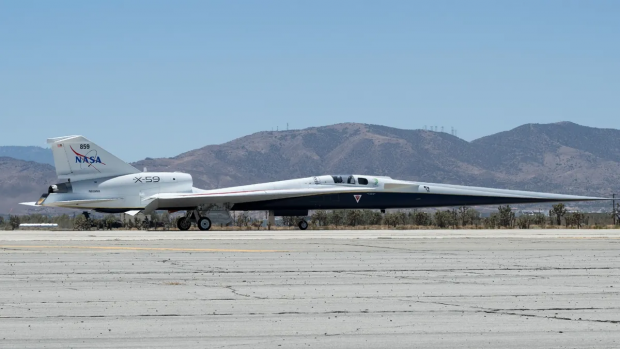
NASA's X-59 "quiet" supersonic jet continues to make its way toward the runway.
The X-59 was designed from the ground up to fly faster than the speed of sound without generating the thunderous sonic booms typically associated with supersonic flight. The 99-foot (30-meter) aircraft features a radical elongated design, which eliminates a front windscreen; pilots instead see what's ahead through an augmented reality-enabled closed circuit camera system that NASA calls the External Vision System, or XVS.
This month, NASA took the experimental aircraft out for a drive, performing what are known as taxi tests. During these tests, NASA test pilot Nils Larson drove the X-59 across a runway at low speeds so crews could ensure the jet's steering and braking systems work as intended. Next, NASA and Lockheed Martin will perform high-speed taxi tests in which the X-59 will accelerate to close to the speed at which it will take off.
