










Breaking News
 The AI Bird-Flu Scenario They Just Published
 Japan's first robot ambulance works the 9-1-1 lines for humanoids
 Cheap smartphone add-on pinpoints hidden cameras to shut down spies
 The $600 Tank That Beats a $10,000 Powerwall
Top Tech News
 BEYOND THE MOON: NASA plans a nuclear-powered fleet to push DEEPER into space
 Big Oil Backs Mazama's $135 Million Bet On Superhot Geothermal
 Quantum compass takes flight on Northrop's Lumberjack drone
 Terrifying AI Behavior Even Its Creators Couldn't Explain
 WW3 Near-Miss? AI Hallucinated Nuclear Weapons Components Aboard Chinese Vessel Bound For Iran
 Stripe Is Building the Toll Road for the Machine Economy
 Toyota Dakar hopeful swaps twin-turbo V6 for hydrogen fuel cells
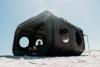 4-min turbo-inflatable cubic camp castle is now available in the USA
 Researchers Used Claude To Hack OpenAI Employee Accounts
 Chinese Scientists Develop New Oil Refining Method That Cuts Energy Use by 90%



Doctors Say Injecting Gold Into Eyeballs Could Restore Lost Vision

Gold, laser goggles, and a camera: it's an unlikely combination that could one day be used to restore vision in people with retinal damage, according to researchers.
In a new study published in the journal ACS Nano, the team found that injecting gold nanoparticles into the eyes of mice with retinal disorders helped stimulate the rodents' visual systems and bring back some vision.
When targeted with infrared lasers, the microscopic gold pieces reproduce electrical signals similar to those emitted by cells in the retina that are essential to eyesight but are damaged by conditions like macular degeneration, which affects some 20 million Americans.