










Breaking News
 WATCH LIVE: Trump addresses 2026 United Nations General Assembly
 The current decline in US bonds is unprecedented:
 The article is getting a lot of attention.
 SpaceX Starmind AI in Space Radiator
Top Tech News
 BEYOND THE MOON: NASA plans a nuclear-powered fleet to push DEEPER into space
 Big Oil Backs Mazama's $135 Million Bet On Superhot Geothermal
 Quantum compass takes flight on Northrop's Lumberjack drone
 Terrifying AI Behavior Even Its Creators Couldn't Explain
 WW3 Near-Miss? AI Hallucinated Nuclear Weapons Components Aboard Chinese Vessel Bound For Iran
 Stripe Is Building the Toll Road for the Machine Economy
 Toyota Dakar hopeful swaps twin-turbo V6 for hydrogen fuel cells
 4-min turbo-inflatable cubic camp castle is now available in the USA
 Researchers Used Claude To Hack OpenAI Employee Accounts
 Chinese Scientists Develop New Oil Refining Method That Cuts Energy Use by 90%



The World's Largest 3D Printer Is Building Cozy Homes from Wood
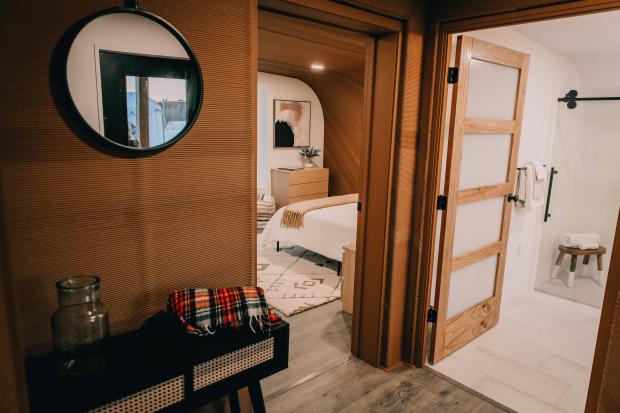
It's part of a move towards making 3D printing faster and more sustainable in a state where the housing shortage that has metastasized in most states around the country is dire.
It's thought that 80,000 new homes will be needed over the next 5 years to keep pace with demand, and though it takes years for building codes to be changed, the technicians at the Advanced Structures & Composites Center (ASCC) at the Univ. of Maine hope their new toy can help address this need.
Guinness World Records certified the machine at ASCC as the world's largest prototype polymer 3D printer, capable of creating a 600 square foot house 96 feet in length, 36 feet in width, and 18 feet tall entirely out of bio-based material at a rate of 500 pounds per hour.
In 2022, it could print the walls, floors, and roof of the house in just 96 hours, but the ACSS has been refining the design with the hope of doubling the printing speed and getting it down to a 48-hour timeline.
"When they're doing concrete, they're only printing the walls," Habib Dagher, the executive director of ACSS told CNN. "The approach we've taken is quite different from what you've seen, and you've been reading about for years."
Indeed, GNN has reported on a fair number of 3D printing projects, but most if not all involve printing only the walls. One fantastical exception is an Italian firm that is 3D-printing domed, beehive-like, modular concept homes inspired by the Great Enclosure in Zimbabwe.
The ASCC is calling the house design the BioHome3D, and says it's rare people who tour the concept version don't ask when they "can have one up?"
The interior gives the feel of a modern Scandinavian wooden cabin, making it fit well with the Maine aesthetic. The ASCC is now doing work on how to incorporate conduits for wiring and plumbing "exactly where an architect would want them," says Dagher.