










Breaking News
 This is the future we shall bring into being
 Elon Musk's Vision For The Future Looks Like A Movie
 Phosphorus Munitions Fired by Israel Burn Groves, Orchards in Southern Lebanon
 Iran's IRGC Warns It Will Expand 'Geography of the War' If the US Attacks Again
Top Tech News
 BEYOND THE MOON: NASA plans a nuclear-powered fleet to push DEEPER into space
 Big Oil Backs Mazama's $135 Million Bet On Superhot Geothermal
 Quantum compass takes flight on Northrop's Lumberjack drone
 Terrifying AI Behavior Even Its Creators Couldn't Explain
 WW3 Near-Miss? AI Hallucinated Nuclear Weapons Components Aboard Chinese Vessel Bound For Iran
 Stripe Is Building the Toll Road for the Machine Economy
 Toyota Dakar hopeful swaps twin-turbo V6 for hydrogen fuel cells
 4-min turbo-inflatable cubic camp castle is now available in the USA
 Researchers Used Claude To Hack OpenAI Employee Accounts
 Chinese Scientists Develop New Oil Refining Method That Cuts Energy Use by 90%



Off-Grid Medicine Kit – How To Make Your Own Tea Tree Oil
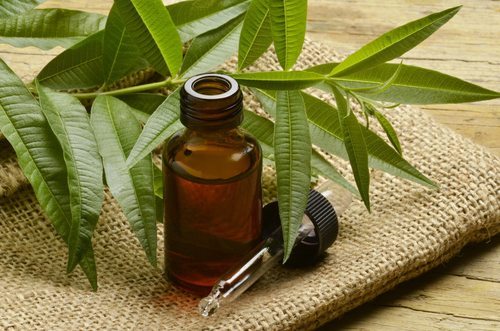
A homesteading, off-the-grid, or prepping family should keep at least 24 bottles of essential oil on hand for every three members of the family or group. Tea tree oil is a must for every bug out bag and first aid kit.
Making vs. Buying
Melaleuca alternifolia trees (a.k.a. "tea trees") grow mostly in Australia, which limits access to raw leaves for many. Fortunately, you can also buy the leaves wholesale. Either way, the steam distillation process must be used to create this essential oil. The essential oil contains 48 natural compounds and no one can reproduce it synthetically. Effective grades of tea tree oil can typically be purchased for around $5 to $7 per bottle, either online or at a local store.
How to Make Tea Tree Oil
If you have a source of leaves, use the following directions to make the oil.
Place tea tree leaves in a pot and pour in only enough water to cover the leaves. Put a vegetable steamer into the pot over the top of the leaves and water.
Place a measuring cup inside the vegetable steamer.
Place the lid on the pot upside down so that the handle nub in the center is pointing towards the measuring cup.
Turn the stove on high to boil the water and steam the leaves. The water will soon begin to condense and evaporate. The condensation will slide towards the handle and into the measuring cup.