










Breaking News
 No Benefits: Why Most Americans Hate The Idea Of AI Data Centers
 Are America's Youth Really Embracing Socialism?
 Are We About to See a Foreclosure WAVE Hit the US Housing Market?
 They Rolled Out the Relics - Then Cut the Working-Lands Money
Top Tech News
 World's smallest CT scanner fits in the palm of your hand
 The Tesla Roadster will blow people's minds
 Peter Thiel-Funded Company Anduril to Triple the Number of Autonomous Surveillance Towers...
 Quantum computing may soon become part of the microscope itself.
 Volkswagen Just Unveiled The Most Efficient EV Ever Tested
 NASA Super Light Solar Sail Project Will Be 12-40 Times Lighter and Faster
 Space Telescope Interferometer to Image Exoplanet Continents
 Twenty-five years of "temporary": how 9/11 built a surveillance state Americans never vote
 I'll Never Buy Another WALMART Battery!
 Shoei GT-Air 3 Smart helmet drops with built-in AR for $1,500



Wood scraps turn 'useless' desert sand into concrete
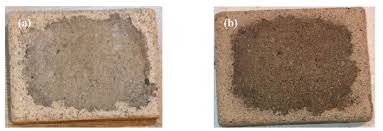
This group of engineers has developed a method to transform it into a new construction material that's perfect for pavements – and it can help reduce the need to destructively extract sand from rivers.
It's estimated that about 19 million square miles (30.5 million sq km) of planet Earth is covered by deserts. That's a lot of sand – useless sand, I might add. Meanwhile, sand that's used for concrete and mortar in construction is collected from riverbeds and riverbanks, as well as from crushing quarry stones, and digging up seafloors and pits underground. All of these sources erode or deplete environmental resources.
As such, figuring out a way to make use of desert sand could help offset the damage done to some degree. To that end, researchers from the Norwegian University of Science and Technology (NTNU) and the University of Tokyo have come up with what they're calling Botanical Sand Concrete (BSC), or Sandcrete.
"The challenge is that desert sand is so fine-grained that it is not suitable as a fastener in concrete. In other words, the concrete will not be hard enough to be used in construction projects," said Ren Wei, a postdoctoral fellow at NTNU who authored the paper on Sandcrete that appeared in the Journal of Building Engineering last November.
After testing a range of types of desert sand and different ways to mix it, the team figured out a recipe combining equal parts of desert sand with powdered wood at a high temperature of 356 °F (180 °C) and high pressure, using a double-plate hot-pressing machine to create blocks.
Instead of a chemical reaction with cement, Sandcrete relies on the lignin (organic polymers) found naturally in wood. Under heat and pressure, the lignin becomes soft and acts like a natural glue that binds the sand particles together. The natural alkalinity of the sand also helps this adhesive bond more effectively, resulting in a block strong enough to be used for pavement bricks, as prescribed by Japanese Industrial Standards.
Despite my opening for this story, the researchers note that Sandcrete will make the most sense when used in arid regions close to deserts, where the sand can be sourced nearby, so it doesn't incur high environmental costs of transporting it over long distances.