










Breaking News
 One company does over 50% of all school photos in America and over 25% of school photos globally
 Your Water Filter Will Clog - The Medieval Sand Filtration System That Purifies Forever
 Aaron Day - BTC and Stable Coins: 'The Creature From Epstein Island' (Publisher Recommended)
 Why We'll Win
Top Tech News
 SpaceX Authorized to Increase High Speed Internet Download Speeds 5X Through 2026
 Space AI is the Key to the Technological Singularity
 Velocitor X-1 eVTOL could be beating the traffic in just a year
 Starlink smasher? China claims world's best high-powered microwave weapon
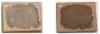 Wood scraps turn 'useless' desert sand into concrete
 Let's Do a Detailed Review of Zorin -- Is This Good for Ex-Windows Users?
 The World's First Sodium-Ion Battery EV Is A Winter Range Monster
 China's CATL 5C Battery Breakthrough will Make Most Combustion Engine Vehicles OBSOLETE
 Study Shows Vaporizing E-Waste Makes it Easy to Recover Precious Metals at 13-Times Lower Costs
 Smart dust technology...


How $30BILLION of taxpayers' money put aside for welfare pot became a 'slush fund'...

More than $30 billion in taxpayer-funded welfare money intended to help America's poorest families has instead beeen used as a 'slush fund' - diverted into programs ranging from college scholarships to government budget backfills.
The Temporary Assistance for Needy Families program, known as TANF, was created nearly three decades ago to provide direct financial support and services to struggling families.
Today, the program distributes about $16.5 billion annually in federal funds, supplemented by roughly $15 billion in state contributions.
But federal auditors and analysts say the program's structure, which gives states broad control over spending with limited reporting requirements, has made it difficult to track how billions of dollars are ultimately used.
States often use TANF money to finance programs with only indirect connections to helping poor families, said Hayden Dublois of the Foundation for Government Accountability. He described the system's lack of oversight as 'fraud by design.'
'There are very little, if any, safeguards,' Dublois told the Wall Street Journal.
He estimates that roughly one in five TANF dollars, or about $6 billion each year, is misspent.
Despite the program's size, fewer families now receive direct cash assistance than in previous decades.
Federal data shows that about 849,000 families received monthly TANF payments in fiscal year 2025, down from approximately 1.9 million families in 2010.
Instead, states have increasingly directed funds to contractors, nonprofits and other government programs.
Nick Gwyn, a policy expert with the Center on Budget and Policy Priorities, said the shift reflects a broader transformation in how the program operates.
'The program has drifted away from the core purpose of supporting families with very little income,' Gwyn told the WSJ.
Audits conducted in multiple states have uncovered persistent problems with oversight and financial reporting.