










Breaking News
 This is the future we shall bring into being
 Elon Musk's Vision For The Future Looks Like A Movie
 Phosphorus Munitions Fired by Israel Burn Groves, Orchards in Southern Lebanon
 Iran's IRGC Warns It Will Expand 'Geography of the War' If the US Attacks Again
Top Tech News
 BEYOND THE MOON: NASA plans a nuclear-powered fleet to push DEEPER into space
 Big Oil Backs Mazama's $135 Million Bet On Superhot Geothermal
 Quantum compass takes flight on Northrop's Lumberjack drone
 Terrifying AI Behavior Even Its Creators Couldn't Explain
 WW3 Near-Miss? AI Hallucinated Nuclear Weapons Components Aboard Chinese Vessel Bound For Iran
 Stripe Is Building the Toll Road for the Machine Economy
 Toyota Dakar hopeful swaps twin-turbo V6 for hydrogen fuel cells
 4-min turbo-inflatable cubic camp castle is now available in the USA
 Researchers Used Claude To Hack OpenAI Employee Accounts
 Chinese Scientists Develop New Oil Refining Method That Cuts Energy Use by 90%



This cozy apartment can be dropped onto existing buildings, and it only costs $11K
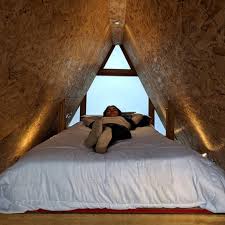
When you think of a tiny house, you likely think of something like Walden—living amongst nature in spartan accommodations. But there's plenty of room for tiny homes in cities around the world, if you count their rooftops. These often-underused spaces represent as much as 30%of additional developable real estate in some cities. Building additional housing on rooftops isn't simple or inexpensive, but as real estate prices and rents skyrocket, many building owners are already converting rooftops into living spaces.
But what if there was a prefab home that you could simply build atop a building, adding enough space for a studio apartment, for less than the price of a car? A project called the Parasitic House is just that. Designed by El Sindicato Arquitectura, it's a 39-square-foot, A-frame house for urban rooftops.
"We were not hired for this project," says Nico Viteri, the firm's founder. "We developed it as a prototype of what we think is small and replicable solution to city and worldwide problems such as gentrification, unwanted urban sprawl, global warming, and more."