










Breaking News
 Russia warns NATO of a possible nuclear response if Kaliningrad exclave is cut off | DW News
 Now They're REALLY Mad
 More Americans are noticing the taste of their favorite snacks keep changing
 Eva: France is on fire. Hundreds of schools all over France are being besieged by second...
Top Tech News
 Med Beds Just Took a MASSIVE Step Forward, Healing People in Days!
 Palmer Luckey: Autonomous Weapons Are Ancient and Why Anduril Won't Build Humanoids | EP #295
 A laser just photographed objects through six feet of concrete
 Elon Musk's Next-Gen Motor Destroy Entire EV Industry
 China's disputed satellite refueling heralds new space war era
 BYD Will Put Solid-State Batteries In An EV Next Year: Executive
 FDA-cleared exoskeleton puts spinal-cord patients back on their feet
 Your Robotic Vacuum Is Watching You -- Could It Someday Testify Against You in Court?
 Why Unigrid's Sodium-Ion Batteries Are the Game-Changer for Off-Grid Energy Storage
 This Battery On Wheels Makes Any Diesel Truck Electric In 5 Minutes



"World's most power dense" electric motor obliterates the field
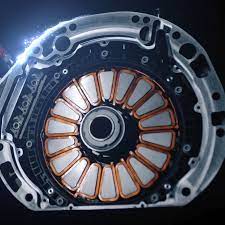
As we've seen repeatedly in the past, good things happen when the British e-machine specialist sets its sights on the record books. Hot off of showing what its motors can do inside a hunk of exotic Mercedes super-hardware, it's teasing how its next generation of motors will redefine expectations all over again. One of its prototype motors smashed the unofficial power density world record, pulling supercar levels of output from a flat, 29-pound (13.1-kg) disc package.
YASA announced this week that it achieved a massive 550 kW (738 hp) from a prototype motor that weighs a mere 13.1 kg (29 lb), equating out to an extremely impressive 42 kW/kg power density. YASA calls it an unofficial world record, noting that it believes it to be the highest power density ever recorded by an electric motor across any sector or application. It plans further testing in the coming weeks and months.
We wish someone would start an official power density record-keeping system for electric motors because it would organize what is otherwise a series of manufacturer claims. We've been tracking it ourselves in terms of the high-powered, compact motors we feature on our pages, going back at least a decade when 5 kW/kg was considered an exceptional feat multiple times ahead of the competition.
More recently, we've seen high-density figures that double or triple that 5.5 mark from Siemens, including the 15.8-kW/kg Donut Labs hollow-core automotive hub motor, 13.4-kW/kg H3X HPDM-250 aerospace motor, and 13.3-kW/kg Equipmake HPM-400 aerospace/marine motor.
YASA's 42 kW/kg blows all of them out of the water, surpassing each one more than two or threefold. YASA notes that its figure is "almost double" the previous industry high mark. The only motor we've seen publicized that surpasses that halfway point of 21 kW/kg is the 28-kW/kg D250 variant from Evolito, itself a spinoff of YASA.
What makes YASA's accomplishment even more impressive is that most of those other aforementioned high-density motors are aimed at aerospace applications, whereas Mercedes-Benz-owned YASA focuses largely on automotive applications. That's why Evolito was spun off as an aerospace brand at the time of the Mercedes acquisition.