










Breaking News
 This is the future we shall bring into being
 Elon Musk's Vision For The Future Looks Like A Movie
 Phosphorus Munitions Fired by Israel Burn Groves, Orchards in Southern Lebanon
 Iran's IRGC Warns It Will Expand 'Geography of the War' If the US Attacks Again
Top Tech News
 BEYOND THE MOON: NASA plans a nuclear-powered fleet to push DEEPER into space
 Big Oil Backs Mazama's $135 Million Bet On Superhot Geothermal
 Quantum compass takes flight on Northrop's Lumberjack drone
 Terrifying AI Behavior Even Its Creators Couldn't Explain
 WW3 Near-Miss? AI Hallucinated Nuclear Weapons Components Aboard Chinese Vessel Bound For Iran
 Stripe Is Building the Toll Road for the Machine Economy
 Toyota Dakar hopeful swaps twin-turbo V6 for hydrogen fuel cells
 4-min turbo-inflatable cubic camp castle is now available in the USA
 Researchers Used Claude To Hack OpenAI Employee Accounts
 Chinese Scientists Develop New Oil Refining Method That Cuts Energy Use by 90%



Russia plans to tow nuclear power station to the Arctic despite environmental...
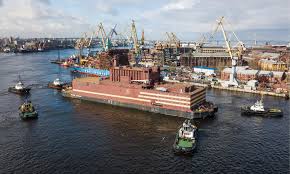
Russia plans to tow a floating nuclear power plant 3,000 miles through the arctic circle.
The Akademik Lomonosov, dubbed the 'floating Chernobyl' by its critics, has been under construction for almost two decades and is headed for the small Arctic port town of Pevek.
Currently based in Murmansk in Russia's west, the enormous 144-meter (472 feet) long platform will eventually supply electricity to settlements and companies extracting hydrocarbons and precious stones in the Chukotka region.
The huge power station was built under President Vladimir Putin's ambitious Arctic expansion plans, which have riled US observers.
Putin has stated his intention to develop the region economically, tapping into the hidden Arctic riches of oil and gas as Siberian reserves diminish.
Only two million people currently live in the hostile region but they generate as much as 20% of country's GDP.