










Breaking News
 This is the future we shall bring into being
 Elon Musk's Vision For The Future Looks Like A Movie
 Phosphorus Munitions Fired by Israel Burn Groves, Orchards in Southern Lebanon
 Iran's IRGC Warns It Will Expand 'Geography of the War' If the US Attacks Again
Top Tech News
 BEYOND THE MOON: NASA plans a nuclear-powered fleet to push DEEPER into space
 Big Oil Backs Mazama's $135 Million Bet On Superhot Geothermal
 Quantum compass takes flight on Northrop's Lumberjack drone
 Terrifying AI Behavior Even Its Creators Couldn't Explain
 WW3 Near-Miss? AI Hallucinated Nuclear Weapons Components Aboard Chinese Vessel Bound For Iran
 Stripe Is Building the Toll Road for the Machine Economy
 Toyota Dakar hopeful swaps twin-turbo V6 for hydrogen fuel cells
 4-min turbo-inflatable cubic camp castle is now available in the USA
 Researchers Used Claude To Hack OpenAI Employee Accounts
 Chinese Scientists Develop New Oil Refining Method That Cuts Energy Use by 90%



New floating PV panels can generate up to 10 percent of U.S. electricity needs
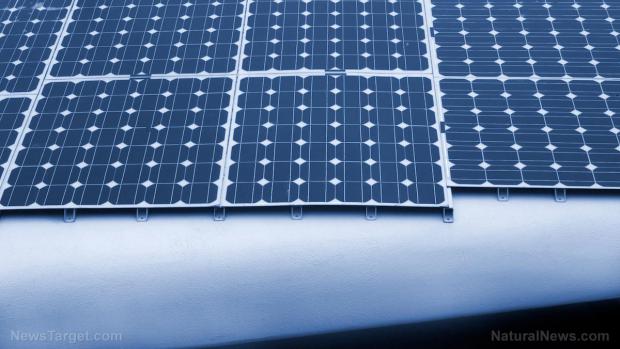
(Natural News) In order to conserve land, researchers proposed an alternative location for space-intensive solar energy farms. They wanted to set up floating solar photovoltaic arrays on the surfaces of the thousands of artificial reservoirs that provide drinking water and hydroelectric power to the United States.
A recent study conducted by the National Renewable Energy Laboratory (NREL) pointed out that there were more than 24,000 man-made lakes and reservoirs scattered throughout the U.S. The research team calculated that these artificial bodies of water could hold enough floating photovoltaic panels to produce up to 10 percent of the nation's yearly output of electricity.
Entitled "Floating PV: Assessing the Technical Potential of Photovoltaic Systems on Man-Made Water Bodies in the Continental U.S.", the study was published in the journal Environmental Science & Technology. It is the first serious attempt to gauge the potential of floating photovoltaics systems to generate energy in the U.S. (Related: How to build your own DIY portable solar power box for emergencies.)
Floating solar photovoltaics is an American concept that became popular overseas
Floating photovoltaic panels are an American innovation. In 2009, an irrigation pond in Napa Valley, California hosted the first ever floating solar facility. The photovoltaic panels were kept afloat by pontoons.