










Breaking News
 This "ETFE" Dome Costs $4,200 and Resists High Heat, UVs and Weathering. Why It's Ide
 The World Is Being Redrawn
  Doug Casey on the Diesel Crisis - and What It Means for the Economy
 Russia Just Took Control of Western Food Plants
Top Tech News
 Tesla Model 3 killer charges from 10 to 97% in just 9 minutes
 World-first unpowered DNA computer sets speed record
 I Power 5 Buildings Off-Grid. Here's How
 The US government is pushing hard to get a working nuclear fission reactor into space by late 2028
 SpaceX Starmind AI in Space Radiator
 China Will Dominate Global Nuclear Energy Through 2035, Analyst Says
 These Absolutely Wild-Looking EVs Are Saudi Arabia's First Homegrown Cars
 BEYOND THE MOON: NASA plans a nuclear-powered fleet to push DEEPER into space
 Big Oil Backs Mazama's $135 Million Bet On Superhot Geothermal
 Quantum compass takes flight on Northrop's Lumberjack drone


nVidia's latest AI technology can instantly transform your doodles into...
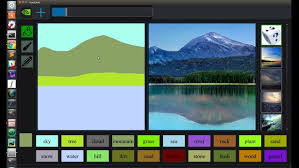
Back in the early yo dawg/me gusta era of internet memes, around 2010, some larrikin made an image ridiculing how-to-draw books. "How to draw an owl," it read. "First, draw some circles. Next, draw the rest of the [expletive] owl." It beautifully skewered the giant leaps some of these how-to books would take between steps, and much mirth was spread.
Well, it seems we can stop laughing, because nVidia has just built an app that lets you draw a few lines and circles, and will then consult its knowledge of a million-odd real images to draw the rest of the [expletive] scenery. And yes, it really does look that simple. Check out the video.
The app is named GauGAN, a nod to French post-impressionist painter Paul Gauguin as well as to the GAN, or Generative Adversarial Network processing that it uses to learn about and mimic scenes.
It's worth understanding a bit about GANs. nVidia founder and CEO Jensen Huang believes they're a massive step forward in deep learning and artificial intelligence, because they remove a huge bottleneck from the AI training process – human interaction. If you're trying to train an AI to recognize owls, for example, you need to feed it a huge number of images, and have a human tell it where the owls are. That's incredibly time consuming, as you'd imagine.