










Breaking News
 This "ETFE" Dome Costs $4,200 and Resists High Heat, UVs and Weathering. Why It's Ide
 The World Is Being Redrawn
  Doug Casey on the Diesel Crisis - and What It Means for the Economy
 Russia Just Took Control of Western Food Plants
Top Tech News
 Tesla Model 3 killer charges from 10 to 97% in just 9 minutes
 World-first unpowered DNA computer sets speed record
 I Power 5 Buildings Off-Grid. Here's How
 The US government is pushing hard to get a working nuclear fission reactor into space by late 2028
 SpaceX Starmind AI in Space Radiator
 China Will Dominate Global Nuclear Energy Through 2035, Analyst Says
 These Absolutely Wild-Looking EVs Are Saudi Arabia's First Homegrown Cars
 BEYOND THE MOON: NASA plans a nuclear-powered fleet to push DEEPER into space
 Big Oil Backs Mazama's $135 Million Bet On Superhot Geothermal
 Quantum compass takes flight on Northrop's Lumberjack drone


Air-breathing SABRE rocket engine set to enter test phase
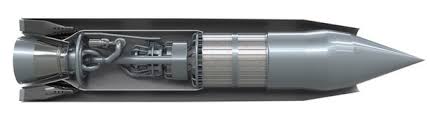
The successful review of the hypersonic engine, which is designed to act as both a jet and a rocket, means that the company can move on the major testing milestones in the next 18 months.
It's been more than 30 years since the ancestor of the SABRE engine began development, with significant investments by Boeing, Rolls-Royce, ESA, and UKSA to the tune of tens of millions of pounds. This may seem like a long time, but SABRE, which is the power plant of the Reaction Engine Skylon spaceplane , is a significant step forward in orbital launcher design.
SABRE is a hypersonic hybrid engine. It draws in air to act like a conventional jet while accelerating to speeds of up to Mach 5 (3,704 mph, 5,961 km/h), then converts to a pure rocket engine burning hydrogen and liquid oxygen, making speeds of up to Mach 25 (17,521 mph, 29,808 km/h) possible.