










Breaking News
 This is the future we shall bring into being
 Elon Musk's Vision For The Future Looks Like A Movie
 Phosphorus Munitions Fired by Israel Burn Groves, Orchards in Southern Lebanon
 Iran's IRGC Warns It Will Expand 'Geography of the War' If the US Attacks Again
Top Tech News
 BEYOND THE MOON: NASA plans a nuclear-powered fleet to push DEEPER into space
 Big Oil Backs Mazama's $135 Million Bet On Superhot Geothermal
 Quantum compass takes flight on Northrop's Lumberjack drone
 Terrifying AI Behavior Even Its Creators Couldn't Explain
 WW3 Near-Miss? AI Hallucinated Nuclear Weapons Components Aboard Chinese Vessel Bound For Iran
 Stripe Is Building the Toll Road for the Machine Economy
 Toyota Dakar hopeful swaps twin-turbo V6 for hydrogen fuel cells
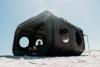 4-min turbo-inflatable cubic camp castle is now available in the USA
 Researchers Used Claude To Hack OpenAI Employee Accounts
 Chinese Scientists Develop New Oil Refining Method That Cuts Energy Use by 90%



This magic fabric ensures you're never too hot and never too cold
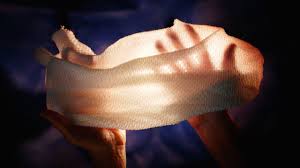
Scientists at the University of Maryland have engineered a new fabric capable of cooling you down or heating you up whenever your body veers from its normal temperature and humidity levels.
It's an amazing discovery that could be used in everything, from our clothes to our beds. Imagine workout clothes that never let you get too hot. It could also be used to provide a comfortable "skin" to babies, the elderly, and people with disabilities.
The fabric doesn't depend on external power or any electronic mechanism to work its magic. Instead, it's made with a yarn that combines two synthetic material in its threads, which are coated with carbon nanotubes. One absorbs water while the second one repels it. At the same time, the fibers expand or contract when the temperature changes.
The result is a fabric that reacts to your body heat and wetness. If you are running in the park, the fibers will "feel" the increased temperature and sweat, tightening up. This motion activates the nanotubes, letting the heat escape and the sweat evaporate.