










Breaking News
 Who Will Find What the Finders Hide? Addendum
 Seven Days in the Dark: How I Watched My Neighbors Turn Into Thieves...
 Oracle Invokes Force Majeure on Project Jupiter AI Data Center
 Something to Know About Saaaaaaafety
Top Tech News
 Tesla Model 3 killer charges from 10 to 97% in just 9 minutes
 World-first unpowered DNA computer sets speed record
 I Power 5 Buildings Off-Grid. Here's How
 The US government is pushing hard to get a working nuclear fission reactor into space by late 2028
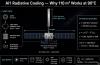 SpaceX Starmind AI in Space Radiator
 China Will Dominate Global Nuclear Energy Through 2035, Analyst Says
 These Absolutely Wild-Looking EVs Are Saudi Arabia's First Homegrown Cars
 BEYOND THE MOON: NASA plans a nuclear-powered fleet to push DEEPER into space
 Big Oil Backs Mazama's $135 Million Bet On Superhot Geothermal
 Quantum compass takes flight on Northrop's Lumberjack drone


This Russian startup wants to put huge ads in space. Not everyone is on board with the idea.

If it sometimes feels as if the world is awash in advertisements, just wait. A Russian startup just revealed plans to use swarms of tiny, light-reflecting satellites to create sprawling billboards in space.
The first of StartRocket's space-based ads, shown in a new concept video released by the company last week, could go up by 2021. The ads — a bit like skytyping, only in low-Earth orbit rather than in the atmosphere — would be visible only at night but could be seen from just about anywhere on the planet.
The ads would be created by an array of tiny satellites, each equipped with a reflective sail about 30 feet in diameter. As these "cubesats" orbit at an altitude of about 280 miles, sunlight would reflect off the sails to form luminous words or logos visible from the ground below.