










Breaking News
 We're Costing the GOP the US Senate - Aaron Day
 Who Will Find What the Finders Hide? Addendum
 Seven Days in the Dark: How I Watched My Neighbors Turn Into Thieves...
 Oracle Invokes Force Majeure on Project Jupiter AI Data Center
Top Tech News
 Tesla Model 3 killer charges from 10 to 97% in just 9 minutes
 World-first unpowered DNA computer sets speed record
 I Power 5 Buildings Off-Grid. Here's How
 The US government is pushing hard to get a working nuclear fission reactor into space by late 2028
 SpaceX Starmind AI in Space Radiator
 China Will Dominate Global Nuclear Energy Through 2035, Analyst Says
 These Absolutely Wild-Looking EVs Are Saudi Arabia's First Homegrown Cars
 BEYOND THE MOON: NASA plans a nuclear-powered fleet to push DEEPER into space
 Big Oil Backs Mazama's $135 Million Bet On Superhot Geothermal
 Quantum compass takes flight on Northrop's Lumberjack drone


China's Chang'e 4 Spacecraft Enters Lunar Orbit Ahead of 1st-Ever Far Side Landing
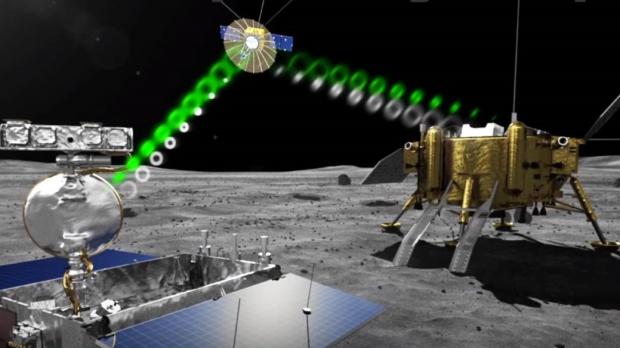
The spacecraft entered an elliptical lunar polar orbit with a perilune of 62 miles (100 kilometers) at 3:45 a.m. EST (0845 GMT) Dec. 12 following a lunar orbit insertion burn.
The spacecraft's single main variable thruster fired at 80 miles (129 km) distant from the moon following the issuing of a command from the Beijing Aerospace Command and Control Center (BACC) at 3:39 a.m. EST (0839 GMT).
The China Lunar Exploration Project (CLEP) announced the success of the crucial braking maneuver within minutes and confirmed that the spacecraft was functioning well and will begin preparations for communications tests with a relay satellite and refining its orbit.
Chang'e 4 was launched by a Long March 3B carrier rocket from the Xichang Satellite Launch Center, southwest China, at 1:23 p.m. EST (1823 GMT) on Dec. 7 for a 110-hour journey to the moon.