










Breaking News
 WHO's High-Price Pandemic Plan
 Poll: Most Americans Agree With Massie - Hegseth Must Go!
 We're Costing the GOP the US Senate - Aaron Day
 Who Will Find What the Finders Hide? Addendum
Top Tech News
 Tesla Model 3 killer charges from 10 to 97% in just 9 minutes
 World-first unpowered DNA computer sets speed record
 I Power 5 Buildings Off-Grid. Here's How
 The US government is pushing hard to get a working nuclear fission reactor into space by late 2028
 SpaceX Starmind AI in Space Radiator
 China Will Dominate Global Nuclear Energy Through 2035, Analyst Says
 These Absolutely Wild-Looking EVs Are Saudi Arabia's First Homegrown Cars
 BEYOND THE MOON: NASA plans a nuclear-powered fleet to push DEEPER into space
 Big Oil Backs Mazama's $135 Million Bet On Superhot Geothermal
 Quantum compass takes flight on Northrop's Lumberjack drone


CHINA GOING TO DARK SIDE OF THE MOON IN MYSTERIOUS MISSION
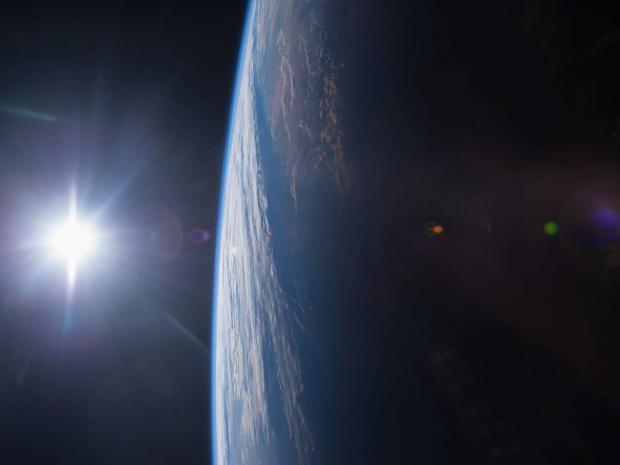
The Chang'e-4 mission will help illuminate some of the most shadowy secrets of our nearby neighbour, after landing on the far side of the world.
No spacecraft has made such a journey onto the distant part of the Moon. Doing so is difficult because it means venturing to a part of the Moon that is largely unknown to us, since we can never see its far side from Earth.
As well as the audacious landing on the planet, it will carry a range of scientific experiments. Perhaps most intriguingly of them all is a big container that includes seeds and insect eggs and hence create living things that will have been born on the Moon.