










Breaking News
 "Begin Preparing Yourself..." - Jeffrey Sachs
 The 5-Year Treasury Just Broke 5%... The Whole Curve Is Next
 ICE Denounced for Enacting 'Official Government Policy of Disappearing People'
 Google Just Told Canadian Adults: Give Us Your ID and a Selfie Or Else…And It's Starting Now!!
Top Tech News
 Tesla Model 3 killer charges from 10 to 97% in just 9 minutes
 World-first unpowered DNA computer sets speed record
 I Power 5 Buildings Off-Grid. Here's How
 The US government is pushing hard to get a working nuclear fission reactor into space by late 2028
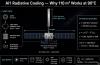 SpaceX Starmind AI in Space Radiator
 China Will Dominate Global Nuclear Energy Through 2035, Analyst Says
 These Absolutely Wild-Looking EVs Are Saudi Arabia's First Homegrown Cars
 BEYOND THE MOON: NASA plans a nuclear-powered fleet to push DEEPER into space
 Big Oil Backs Mazama's $135 Million Bet On Superhot Geothermal
 Quantum compass takes flight on Northrop's Lumberjack drone


Intel makes smallest quantum computing chip with spin qubits
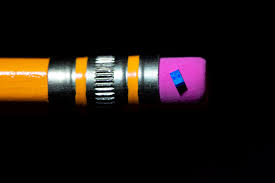
The new chip was created in Intel's D1D Fab in Oregon using the same silicon manufacturing techniques that the company has perfected for creating billions of traditional computer chips. Smaller than a pencil's eraser, it is the tiniest quantum computing chip Intel has made.
The new spin qubit chip runs at the extremely low temperatures required for quantum computing: roughly 460 degrees below zero Fahrenheit – 250 times colder than space.
Spin qubits are very small (about 50 nanometers across) and visible only under an electron microscope. About 1,500 qubits could fit across the diameter of a single human hair.
The design for new Intel spin qubit chip could be dramatically scaled up. Future quantum computers will have millions of qubits — and will be vastly more powerful than today's fastest supercomputers.