










Breaking News
 "Begin Preparing Yourself..." - Jeffrey Sachs
 The 5-Year Treasury Just Broke 5%... The Whole Curve Is Next
 ICE Denounced for Enacting 'Official Government Policy of Disappearing People'
 Google Just Told Canadian Adults: Give Us Your ID and a Selfie Or Else…And It's Starting Now!!
Top Tech News
 Tesla Model 3 killer charges from 10 to 97% in just 9 minutes
 World-first unpowered DNA computer sets speed record
 I Power 5 Buildings Off-Grid. Here's How
 The US government is pushing hard to get a working nuclear fission reactor into space by late 2028
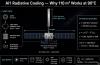 SpaceX Starmind AI in Space Radiator
 China Will Dominate Global Nuclear Energy Through 2035, Analyst Says
 These Absolutely Wild-Looking EVs Are Saudi Arabia's First Homegrown Cars
 BEYOND THE MOON: NASA plans a nuclear-powered fleet to push DEEPER into space
 Big Oil Backs Mazama's $135 Million Bet On Superhot Geothermal
 Quantum compass takes flight on Northrop's Lumberjack drone


"CUORE" experiment seeks to get to the heart of the matter – and antimatter
: why is the universe that surrounds us full of matter, when predictions suggest it should be equally split between matter and antimatter?
For every atomic particle there exists a complementary particle with equal mass but opposite charge: such is the case, for instance, with electrons and positrons, protons and antiprotons, neutrons and antineutrons. For each pair of particles, one is designated as ordinary matter and the other as antimatter (the one exception being Majorana fermions, chargeless particles – such as photons – that act as their own antiparticles).
Astrophysics tells us that the Big Bang should have produced equal amounts of matter and antimatter, but this is clearly not the case. The reason for this imbalance is a still a mystery, but may lie in the nature of the neutrino, a nearly massless subatomic particle that – just like the photon – may act as its own antiparticle.