










Breaking News
 "Begin Preparing Yourself..." - Jeffrey Sachs
 The 5-Year Treasury Just Broke 5%... The Whole Curve Is Next
 ICE Denounced for Enacting 'Official Government Policy of Disappearing People'
 Google Just Told Canadian Adults: Give Us Your ID and a Selfie Or Else…And It's Starting Now!!
Top Tech News
 Tesla Model 3 killer charges from 10 to 97% in just 9 minutes
 World-first unpowered DNA computer sets speed record
 I Power 5 Buildings Off-Grid. Here's How
 The US government is pushing hard to get a working nuclear fission reactor into space by late 2028
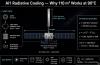 SpaceX Starmind AI in Space Radiator
 China Will Dominate Global Nuclear Energy Through 2035, Analyst Says
 These Absolutely Wild-Looking EVs Are Saudi Arabia's First Homegrown Cars
 BEYOND THE MOON: NASA plans a nuclear-powered fleet to push DEEPER into space
 Big Oil Backs Mazama's $135 Million Bet On Superhot Geothermal
 Quantum compass takes flight on Northrop's Lumberjack drone


Human bone tissue grown from a patient's fat cells in a lab, then implanted to finish ...
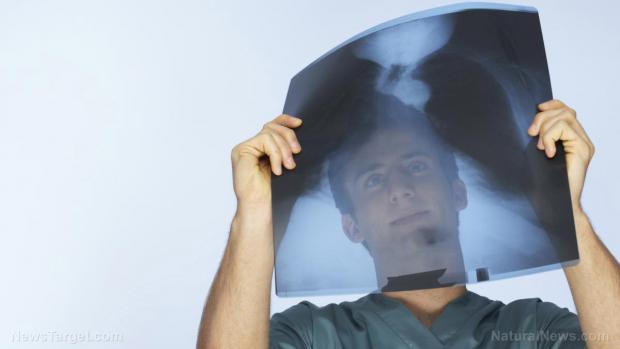
(Natural News) Thanks to an extraordinary medical procedure, a man is on the road to recovering from a fractured tibia with a bone graft created from his own fat cells. This isn't a work of science fiction; it's the result of efforts made by Bonus BioGroup, an Israel-based biomedical company.
According to the TimesOfIsrael.com, a traffic accident left the patient, Danny, with a severely damaged tibia. Going through the standard medical procedure of having it fixed with metal rods ended with him having a five-centimeter gap in his shinbone. The patient was given the choice between an artificial bone fragment or a bone-healing procedure since the bone was unable to heal itself. That was when Bonus BioGroup stepped in.
Fat cells extricated from the patient were separated and cultured on a biodegradable scaffold. Within the span of two weeks, the minute, living bone particles had grown into an injectable bone graft that was transplanted into Danny's body. As per Professor Nimrod Rozen, head of the surgical procedure, the missing part of the bone would regrow in six weeks thanks to the bone particles joining together to construct a fully working bone. When that happens, the tibia will be able to function properly and allow Danny to walk once more.
"This surgery is truly science fiction, it changes the entire game in orthopedics. Today I have the ability to grow any bone in a lab," Rozen added. (Related: Israeli company successfully transplanted lab-grown bones into humans.)
Shortly after receiving the graft, Danny stated that he trusted the doctors and was confident that the procedure was a success. "I am sure they did a good job, and hope that in a few weeks I will be able to stand normally on my foot again," said Danny at the time he was interviewed.
Because the graft was made from the patient's own cells, there's a slim chance that his body would reject the graft post-injection and cause Danny to experience a severe immune reaction. As such, Rozen believes that possibilities of the surgery go beyond that of fractured bones. Cancer patients who've had amputations, older adults who struggle with osteoporosis, and even infants born with cleft palates can all benefit, as can those with dwarfism.
"In every surgery I can add ten centimeters, and it can be repeated several times. This can change the self-esteem of many people," explained Rozen.