










Breaking News
 Xi backs AI safety with Trump, draws Taiwan line, urges Iran talks
 The Israeli Lobby Boasts of Its Rule of America
 Dan Priestly and Lars Lead the Tesla Semi Event
 Russia and China have a plan to disable Starlink
Top Tech News
 Tesla Model 3 killer charges from 10 to 97% in just 9 minutes
 World-first unpowered DNA computer sets speed record
 I Power 5 Buildings Off-Grid. Here's How
 The US government is pushing hard to get a working nuclear fission reactor into space by late 2028
 SpaceX Starmind AI in Space Radiator
 China Will Dominate Global Nuclear Energy Through 2035, Analyst Says
 These Absolutely Wild-Looking EVs Are Saudi Arabia's First Homegrown Cars
 BEYOND THE MOON: NASA plans a nuclear-powered fleet to push DEEPER into space
 Big Oil Backs Mazama's $135 Million Bet On Superhot Geothermal
 Quantum compass takes flight on Northrop's Lumberjack drone


Commercial Perovskite solar cells at 10 cents per watt could soon bring lower cost energy
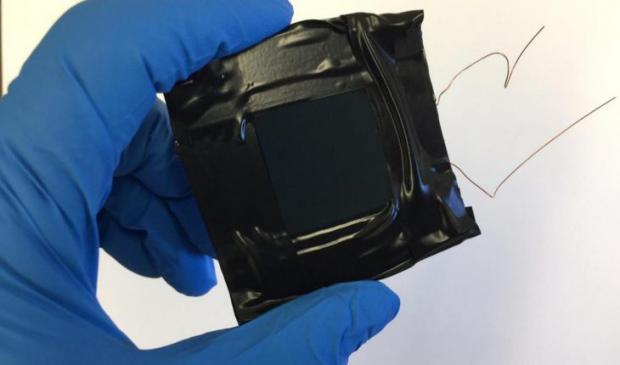
Lower cost
There are estimates that perovskite solar panels could cost just 10 to 20 cents per watt, compared to 75 cents per watt for traditional silicon-based panels — anywhere from 3X to 8X cost savings.
* The ingredients used to create perovskite are widely available and inexpensive to combine, since it can be done at relatively low temperatures (around 100ºC). Silicon cells need to be heated to high temperatures (as high as 900ºC) to remove defects, which is a costly process.
* Silicate perovskite may form up to 93% of the lower mantle, and the magnesium iron form is considered to be the most abundant mineral in Planet Earth, making up 38% of its volume.
* Versatility: Perovskite rolls have a thin, flexible and lightweight structure due to this processing, unlike silicon wafers, which tend to be thick, heavy and rigid. Because of this versatility, perovskite could theoretically be placed on roof shingles, windows or pretty much any surface imaginable. This versatility is what could enable solar to reach a scale that eventually eliminates dependence on fossil fuels entirely.