










Breaking News
 The Download: GLOBAL WAR LOOMING, GOVERNMENT AT YOUR DOOR & DOCTORS...
 Episode 495: AI'S FREE PASS, NIH FINALLY WAKES UP & CHILDHOOD DEATH BOMBSHELL
 Xi backs AI safety with Trump, draws Taiwan line, urges Iran talks
 The Israeli Lobby Boasts of Its Rule of America
Top Tech News
 Tesla Model 3 killer charges from 10 to 97% in just 9 minutes
 World-first unpowered DNA computer sets speed record
 I Power 5 Buildings Off-Grid. Here's How
 The US government is pushing hard to get a working nuclear fission reactor into space by late 2028
 SpaceX Starmind AI in Space Radiator
 China Will Dominate Global Nuclear Energy Through 2035, Analyst Says
 These Absolutely Wild-Looking EVs Are Saudi Arabia's First Homegrown Cars
 BEYOND THE MOON: NASA plans a nuclear-powered fleet to push DEEPER into space
 Big Oil Backs Mazama's $135 Million Bet On Superhot Geothermal
 Quantum compass takes flight on Northrop's Lumberjack drone


Gene therapy getting approved to treat major diseases of muscle and blood
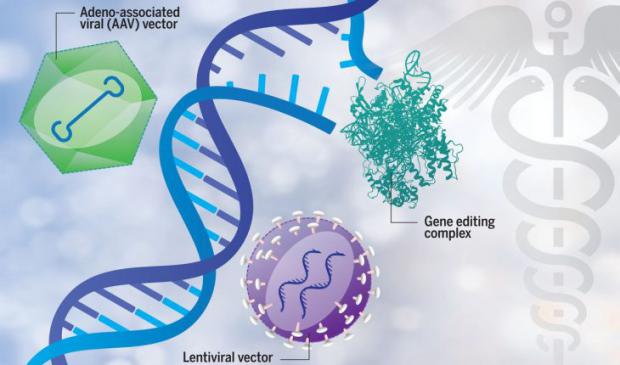
Above- Three essential tools for human gene therapy. AAV and lentiviral vectors are the basis of several recently approved gene therapies. Gene editing technologies are in their translational and clinical infancy but are expected to play an increasing role in the field.
BACKGROUND
Nearly five decades ago, visionary scientists hypothesized that genetic modification by exogenous DNA might be an effective treatment for inherited human diseases. This "gene therapy" strategy offered the theoretical advantage that a durable and possibly curative clinical benefit would be achieved by a single treatment. Although the journey from concept to clinical application has been long and tortuous, gene therapy is now bringing new treatment options to multiple fields of medicine. We review critical discoveries leading to the development of successful gene therapies, focusing on direct in vivo administration of viral vectors, adoptive transfer of genetically engineered T cells or hematopoietic stem cells, and emerging genome editing technologies.