










Breaking News
 The Download: GLOBAL WAR LOOMING, GOVERNMENT AT YOUR DOOR & DOCTORS...
 Episode 495: AI'S FREE PASS, NIH FINALLY WAKES UP & CHILDHOOD DEATH BOMBSHELL
 Xi backs AI safety with Trump, draws Taiwan line, urges Iran talks
 The Israeli Lobby Boasts of Its Rule of America
Top Tech News
 Tesla Model 3 killer charges from 10 to 97% in just 9 minutes
 World-first unpowered DNA computer sets speed record
 I Power 5 Buildings Off-Grid. Here's How
 The US government is pushing hard to get a working nuclear fission reactor into space by late 2028
 SpaceX Starmind AI in Space Radiator
 China Will Dominate Global Nuclear Energy Through 2035, Analyst Says
 These Absolutely Wild-Looking EVs Are Saudi Arabia's First Homegrown Cars
 BEYOND THE MOON: NASA plans a nuclear-powered fleet to push DEEPER into space
 Big Oil Backs Mazama's $135 Million Bet On Superhot Geothermal
 Quantum compass takes flight on Northrop's Lumberjack drone


Skin patch puts the burn on body fat
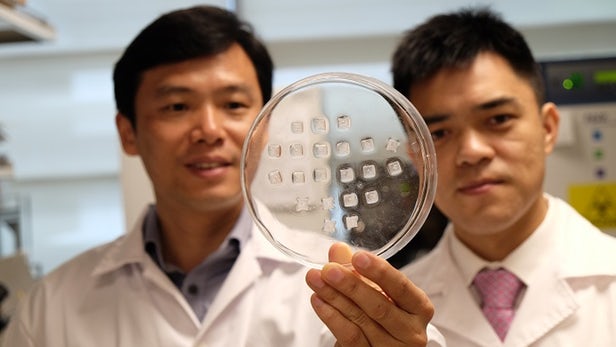
There are already skin patches that help people quit smoking … could patches that help them lose weight be far behind? Well, thanks to research being conducted at Singapore's Nanyang Technological University, the things already exist – for mice, at least.
The underside of each patch is covered with hundreds of microneedles, which are loaded with one of two drugs: either Beta-3 adrenergic receptor agonist or thyroid hormone T3 triiodothyronine. Although both have been shown to reduce body fat by converting energy-storing white fat into energy-burning brown fat, they can have serious side effects if taken orally or via injections.
That's why the patches were developed.
When they're pressed onto an overweight mouse's body for around two minutes, the microneedles (which are thinner in diameter than a human hair) break off and become embedded in the skin. They then harmlessly dissolve, slowly releasing their drug payload directly where it's needed – into the underlying layer of white fat. The drugs subsequently convert it into brown fat, which gets burned off.