










Breaking News
 Evacuations begin as 'blockbuster' nor'easter barrels toward millions in 12 US states
 Trump's military prepares for Cuba as leaked Pentagon memo sends telling signal...
 Ford v. Hyundai: Henry Ford Must Be Turning In His Grave After New Report
 Switzerland Is Still The Most Expensive Place In The World To Eat Out
Top Tech News
 Tesla Model 3 killer charges from 10 to 97% in just 9 minutes
 World-first unpowered DNA computer sets speed record
 I Power 5 Buildings Off-Grid. Here's How
 The US government is pushing hard to get a working nuclear fission reactor into space by late 2028
 SpaceX Starmind AI in Space Radiator
 China Will Dominate Global Nuclear Energy Through 2035, Analyst Says
 These Absolutely Wild-Looking EVs Are Saudi Arabia's First Homegrown Cars
 BEYOND THE MOON: NASA plans a nuclear-powered fleet to push DEEPER into space
 Big Oil Backs Mazama's $135 Million Bet On Superhot Geothermal
 Quantum compass takes flight on Northrop's Lumberjack drone


Icy molecules hold 25,000 gigabytes in a space the size of a quarter
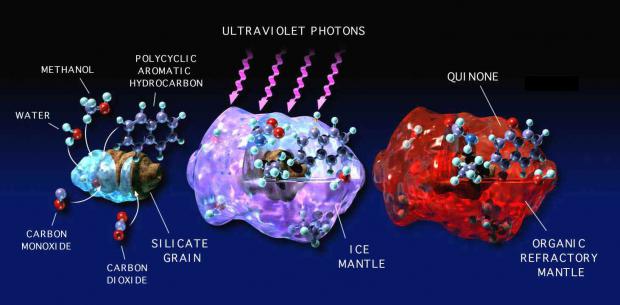
This research could lead to new, high-density data storage systems that potentially can hold more than 25 terabytes of data per square inch. That's around 25,000 gigabytes on something as small as a quarter.
Magnetism is the underlying force that most modern hard disk drives use to store data. Magnetic grains, typically 10 to 20 nanometers in size, are used to encode a single bit of data. These tiny magnetic grains are flipped to either north or south to represent a 1 or a 0. The memory effect, where a material retains its alignment after a greater magnetic field is removed, is called magnetic hysteresis.
The big challenge scientists have faced in developing even smaller data storage systems is that single molecules tended to not achieve magnetic hysteresis unless kept at incredibly cold temperatures. The previous temperature record for achieving magnetic hysteresis on a molecular level was -259 °C. The economics in creating a functional molecular data storage system at that temperature were never particularly practical, as it would require an expensive liquid helium cooling system.