










Breaking News
 Is Big Pharma Selling Postpartum Depression to New Moms?
 Make Men Men Again: Low T Is Now a National Defense Problem
 Druski: They're Lying To You About Overnight Success!
 $6.27 Diesel Just Hit Harvest. The Grocery Aisle Hasn't Felt It Yet.
Top Tech News
 Tesla Model 3 killer charges from 10 to 97% in just 9 minutes
 World-first unpowered DNA computer sets speed record
 I Power 5 Buildings Off-Grid. Here's How
 The US government is pushing hard to get a working nuclear fission reactor into space by late 2028
 SpaceX Starmind AI in Space Radiator
 China Will Dominate Global Nuclear Energy Through 2035, Analyst Says
 These Absolutely Wild-Looking EVs Are Saudi Arabia's First Homegrown Cars
 BEYOND THE MOON: NASA plans a nuclear-powered fleet to push DEEPER into space
 Big Oil Backs Mazama's $135 Million Bet On Superhot Geothermal
 Quantum compass takes flight on Northrop's Lumberjack drone


Edward Snowden's New Job: Protecting Reporters From Spies
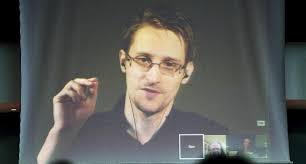
When Edward Snowden leaked the biggest collection of classified National Security Agency documents in history, he wasn't just revealing the inner workings of a global surveillance machine. He was also scrambling to evade it. To communicate with the journalists who would publish his secrets, he had to route all his messages over the anonymity software Tor, teach reporters to use the encryption tool PGP by creating a YouTube tutorial that disguised his voice, and eventually ditch his comfortable life (and smartphone) in Hawaii to set up a cloak-and-dagger data handoff halfway around the world.
Now, nearly four years later, Snowden has focused the next phase of his career on solving that very specific instance of the panopticon problem: how to protect reporters and the people who feed them information in an era of eroding privacy—without requiring them to have an NSA analyst's expertise in encryption or to exile themselves to Moscow. "Watch the journalists and you'll find their sources," Snowden says. "So how do we preserve that confidentiality in this new world, when it's more important than ever?"
Since early last year, Snowden has quietly served as president of a small San Francisco–based nonprofit called the Freedom of the Press Foundation. Its mission: to equip the media to do its job at a time when state-sponsored hackers and government surveillance threaten investigative reporting in ways Woodward and Bernstein never imagined. "Newsrooms don't have the budget, the sophistication, or the skills to defend themselves in the current environment," says Snowden, who spoke to WIRED via encrypted video-chat from his home in Moscow. "We're trying to provide a few niche tools to make the game a little more fair."
The group's 10 staffers and a handful of contract coders, with Snowden's remote guidance, are working to develop an armory of security upgrades for reporters. Snowden and renowned hacker Bunnie Huang have partnered to develop a hardware modification for the iPhone, designed to detect if malware on the device is secretly transmitting a reporter's data, including location. They've recruited Fred Jacobs, one of the coders for the popular encryption app Signal, to help build a piece of software called Sunder; the tool would allow journalists to encrypt a trove of secrets and then retrieve them only if several newsroom colleagues combine their passwords to access the data.