










Breaking News
 Is Big Pharma Selling Postpartum Depression to New Moms?
 Make Men Men Again: Low T Is Now a National Defense Problem
 Druski: They're Lying To You About Overnight Success!
 $6.27 Diesel Just Hit Harvest. The Grocery Aisle Hasn't Felt It Yet.
Top Tech News
 Tesla Model 3 killer charges from 10 to 97% in just 9 minutes
 World-first unpowered DNA computer sets speed record
 I Power 5 Buildings Off-Grid. Here's How
 The US government is pushing hard to get a working nuclear fission reactor into space by late 2028
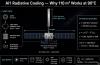 SpaceX Starmind AI in Space Radiator
 China Will Dominate Global Nuclear Energy Through 2035, Analyst Says
 These Absolutely Wild-Looking EVs Are Saudi Arabia's First Homegrown Cars
 BEYOND THE MOON: NASA plans a nuclear-powered fleet to push DEEPER into space
 Big Oil Backs Mazama's $135 Million Bet On Superhot Geothermal
 Quantum compass takes flight on Northrop's Lumberjack drone


Wow! Total Solar Eclipse Seen from 1 Million Miles Away (Video)

The images, which have been combined into a gorgeous total solar eclipse video, were taken by the Deep Space Climate Observatory satellite (DSCOVR), which sits at a gravitationally stable point in space 930,000 miles (1.5 million kilometers) closer to the sun than Earth is.
DSCOVR, a joint mission between NASA and the U.S. National Oceanic and Atmospheric Administration (NOAA), was designed to provide an early space-weather warning system for the planet.
The spacecraft monitors the stream of charged particles flowing outward from the sun called the solar wind, and watches out for eruptions of solar plasma known as coronal mass ejections (CMEs), which can disrupt power grids, radio communications and GPS navigation if they hit Earth. According to DSCOVR project scientist Adam Szabo, the satellite's position upstream of Earth gives the planet 30 minutes' warning of approaching CMEs.