










Breaking News
 Is Big Pharma Selling Postpartum Depression to New Moms?
 Make Men Men Again: Low T Is Now a National Defense Problem
 Druski: They're Lying To You About Overnight Success!
 $6.27 Diesel Just Hit Harvest. The Grocery Aisle Hasn't Felt It Yet.
Top Tech News
 Tesla Model 3 killer charges from 10 to 97% in just 9 minutes
 World-first unpowered DNA computer sets speed record
 I Power 5 Buildings Off-Grid. Here's How
 The US government is pushing hard to get a working nuclear fission reactor into space by late 2028
 SpaceX Starmind AI in Space Radiator
 China Will Dominate Global Nuclear Energy Through 2035, Analyst Says
 These Absolutely Wild-Looking EVs Are Saudi Arabia's First Homegrown Cars
 BEYOND THE MOON: NASA plans a nuclear-powered fleet to push DEEPER into space
 Big Oil Backs Mazama's $135 Million Bet On Superhot Geothermal
 Quantum compass takes flight on Northrop's Lumberjack drone


World's smallest optical switch uses a single atom
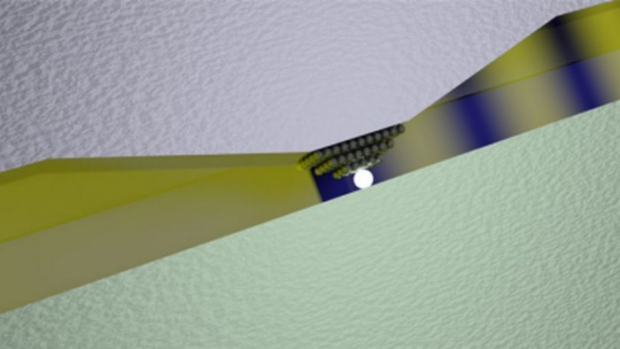
However, as these components are shrunk ever further, fundamental limits to their dimensions are dictated by the wavelength of light itself. Now researchers at ETH Zurich claim to have overcome this limitation by creating both the world's smallest optical switch using a single atom, and accompanying circuitry that appears to break the rules by being smaller than the wavelength of the light that passes through it.
The exponential growth of data and its accompanying reception and transmission around the world, has meant that the severe bandwidth limitations of copper-based networks have been largely eschewed in favor of high-capacity optical systems. And, as more and more photonics-based electronic devices and processors come on line, almost all conventional wiring will follow suit and eventually be replaced by optical fibers, waveguides, and other light-carrying conduits. Some future connecting devices, however, will still require the conversion of electrical signals to light, as do current data transmission systems, and it is one of these interim components – the modulator – that researchers at ETH Zurich are seeking to miniaturize.