










Breaking News
 Is Big Pharma Selling Postpartum Depression to New Moms?
 Make Men Men Again: Low T Is Now a National Defense Problem
 Druski: They're Lying To You About Overnight Success!
 $6.27 Diesel Just Hit Harvest. The Grocery Aisle Hasn't Felt It Yet.
Top Tech News
 Tesla Model 3 killer charges from 10 to 97% in just 9 minutes
 World-first unpowered DNA computer sets speed record
 I Power 5 Buildings Off-Grid. Here's How
 The US government is pushing hard to get a working nuclear fission reactor into space by late 2028
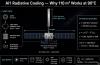 SpaceX Starmind AI in Space Radiator
 China Will Dominate Global Nuclear Energy Through 2035, Analyst Says
 These Absolutely Wild-Looking EVs Are Saudi Arabia's First Homegrown Cars
 BEYOND THE MOON: NASA plans a nuclear-powered fleet to push DEEPER into space
 Big Oil Backs Mazama's $135 Million Bet On Superhot Geothermal
 Quantum compass takes flight on Northrop's Lumberjack drone


Self-adaptive composite heals itself and returns to its original shape
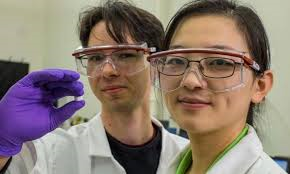
Now a team of scientists at Rice University have come up with a new twist. It's a Self-Adaptive Composite (SAC) that is not only self healing, but also has reversible self-stiffening properties that allow it to spring back into shape like a sponge.
Until now, self-healing materials have tended to be fairly rigid substances laced with microchannels or capsules filled with resins that squirt out and harden around damaged areas after they've been cracked or punctured. The problem is that this rigidity limits their applications as well as their ability to self-repair. Seeking something that was more a biocompatible material for tissue engineering or that can act as a lightweight, defect-tolerant structural component, the Rice team hit on the idea of a new material based on the structure of living tissue.