










Breaking News
 Ukraine Collapse! The Walls Are Closing In On Zelensky's War and Money Laundering Operation
 The German State Continues to Torture Dr. Reiner Fuellmich
 Karen Kwiatkowski: Democrats on Notice, Midterms a Massive Protest Against U.S. Wars, Not Just Trump
 Why Mold Illness Goes Unrecognized
Top Tech News
 Prism puts an eye-controlled Linux computer on your face
 Remember Yesterday: AI For Today and Tomorrow
 Robot Mowers Invade America's Golf Courses, Putting Groundskeepers On Notice
 Monstrous 13-foot mecha craves the dangerous jobs humans avoid
 Scentronic tech lets you smell the internet
 Virgin Galactic's new rocket plane revives its bid for a space airline
 The metal kept moving east while the sellers ran, and Ronnie called the flush a week early
 Chinese Company Develops $1,000 AI-Powered Laser System To Kill Mosquitoes
 PRP vs Exosomes vs Stem Cells: Which Fits Your Condition?
 SHOCKING: The Secret (Frantzve) Family Business



It's The War, Stupid
But there is also the reverse error: a deliberate seeking out of complexity when simple explanations suffice.
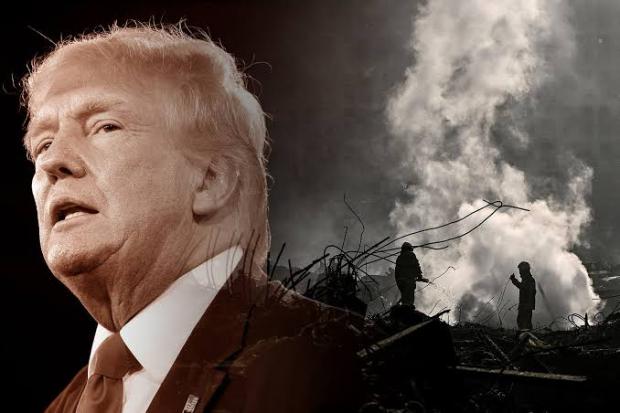
In the wake of the Democratic blowout in Tuesday's midterms - South Carolina, Kansas, and Texas have gone blue - beware the preachers of holy complexity bent on obfuscating the obvious: President Trump and the GOP broke their pledge of peace, launched an ill-conceived war with Iran, and thus exacerbated an affordability crisis they'd been elected to solve.
To be sure, other failures marked the first two years of the Trump administration: the chaotic tariff regime, the grotesque corruption, the performative cruelty of ICE, Trump's own descent from mere reality-TV vanity to ballroom-obsessed, Neronian caprice. But the Iran war - given both its inflationary effects and galling betrayal of one of Trump's core pledges - looms largest.
The preachers of holy complexity have good reason to avoid this bare truth. Because it indicts their entire project: a hawkish foreign policy that sees US and Israeli interests as identical or nearly so. Its advocates have for years underwritten Israeli maximalism at great cost to American global prestige and domestic well-being. After the ballot-box shellacking wrought by the Iran war, that project faces a bleak future in mainstream American politics.
Voter polling - what actual voters tell pollsters upon leaving the precinct - is rarely this unambiguous. Nine of 10 voters identified the cost of living as a major concern as they headed to the polls. Only a quarter of voters described the condition of the US economy as "excellent" or "good", while three-fourths described it as "not so good" or "poor". And a staggering 87% of voters said they were very or somewhat concerned about the price of gas and diesel.
Most telling: about 60% of voters told the Associated Press that the Iran war was a mistake. Yes, fewer identified the Iran war as a "crucial" factor than did the cost of living. Then again, the war itself is a cost-of-living issue.
It's also true that, as political economist Justin Vassallo noted in these pages, the current inflation is partly structural, having to do with the general trend toward de-globalization. But since energy prices ramify through the economy, the Islamic Republic's (predictable) closure of the Strait of Hormuz in response to the US-Israeli invasion has unquestionably aggravated the affordability crisis.