










Breaking News
 Signs Of Fresh Houthi Attack On Saudi Aramco Facilities
 Trump Responds To Watchdog Report: Force Powell Off The Fed Board - Or Sue Him
 Congress Keeps The Trading Desk Open: Senate Dems Sink Lawmaker Trading Ban 53-47
 Trump's $200BN Korean "Investment" Is A Gas Plant With No Customers, Eight Reactors Wi
Top Tech News
 Elon Musk's Next-Gen Motor Destroy Entire EV Industry
 China's disputed satellite refueling heralds new space war era
 BYD Will Put Solid-State Batteries In An EV Next Year: Executive
 FDA-cleared exoskeleton puts spinal-cord patients back on their feet
 Your Robotic Vacuum Is Watching You -- Could It Someday Testify Against You in Court?
 Why Unigrid's Sodium-Ion Batteries Are the Game-Changer for Off-Grid Energy Storage
 This Battery On Wheels Makes Any Diesel Truck Electric In 5 Minutes
 Mass-Production of AI Infrastructure – Speed Up by 10X
 3D-printed Martian mud homes look critical for life beyond Earth
 Inside The Texas Factory Racing To Break China's Grip On EV Magnets



Congress Keeps The Trading Desk Open: Senate Dems Sink Lawmaker Trading Ban 53-47
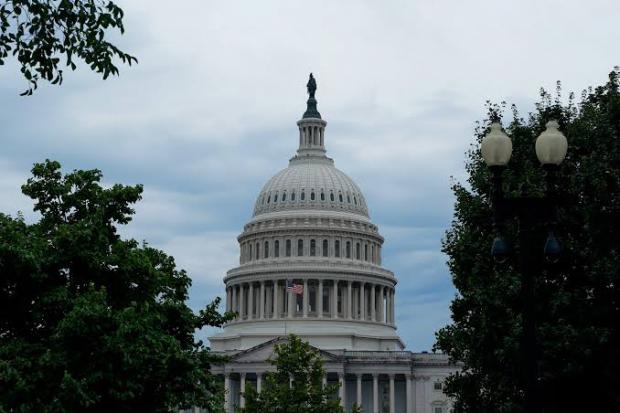
Senate Democrats just blocked cloture on a bill that would have stopped lawmakers from buying new publicly traded stocks. The vote was 53-47. Sixty were required. But guess what happened? Republicans dropped Voter ID into it so the Dems would nuke it.
The measure was H.R. 7008, the Stop Insider Trading Act. House Republicans shoved it through on July 22 by 232-198, with 13 Democrats peeling off. Senate Majority Leader John Thune teed it up this week as a pre-recess vote for vulnerable incumbents, with Nebraska Republican Pete Ricketts as the face of the Senate version.
It was not a vote on final passage. It was a vote on whether the Senate would even begin debate. Every Democrat lined up against it. Republicans got their campaign tape. The public got another press release about "integrity."
What The Bill Actually Did
This was not a ban on congressional stock ownership. It was a ban on new purchases of publicly listed names by members, spouses, and dependent children, plus a 7-to-14-day public notice before a sale.
Stop Insider Trading Act - the fine print
Banned: new buys of publicly traded stocks and equivalent economic exposure.
Allowed: keeping existing portfolios; selling after advance notice; widely held funds/ETFs.
Penalty: greater of $2,000 or 10% of the trade, plus forfeiture of profits.
Not covered: the president and vice president; private companies; commodities; forced divestiture.
Bolted on: national photo-ID language lifted from the SAVE America Act.
Ricketts has been selling the companion as commonsense. In a July op-ed he said members could keep existing stock but had to telegraph sales so "the market" could get ahead of them. Violating a $1 million sale without notice would cost $100,000 plus profits. That is a parking ticket in a town where a well-timed options lot can clear that before lunch.
The 2012 STOCK Act already pretends to police this. It does not ban trades. It requires delayed disclosure and affirms that insider-trading law applies to Congress. The new bill would have gone further on purchases. It still left the core conflict intact: lawmakers can hold the names they regulate, vote the names they hold, and sell when the calendar is convenient.
The "Poison Pill" Was The Point
Senate Minority Leader Chuck Schumer did not hide the strategy. On Tuesday, in floor remarks his office billed as exposing a "theatrical farce," he accused Republicans of "skullduggery" for wiring a voter-ID mandate into an ethics bill.