










Breaking News
 The Next Five Weeks
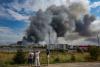 Russia Tells Businesses to Defend Themselves from Ukraine's Drones
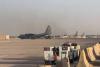 US to Exit Iraq After Wasting 1.7 Trillion Over 23 Years
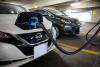 America's Clean Car Retreat Is Complete. The World Will Move On Without Us
Top Tech News
 Elon Musk's Next-Gen Motor Destroy Entire EV Industry
 China's disputed satellite refueling heralds new space war era
 BYD Will Put Solid-State Batteries In An EV Next Year: Executive
 FDA-cleared exoskeleton puts spinal-cord patients back on their feet
 Your Robotic Vacuum Is Watching You -- Could It Someday Testify Against You in Court?
 Why Unigrid's Sodium-Ion Batteries Are the Game-Changer for Off-Grid Energy Storage
 This Battery On Wheels Makes Any Diesel Truck Electric In 5 Minutes
 Mass-Production of AI Infrastructure – Speed Up by 10X
 3D-printed Martian mud homes look critical for life beyond Earth
 Inside The Texas Factory Racing To Break China's Grip On EV Magnets



US to Exit Iraq After Wasting 1.7 Trillion Over 23 Years
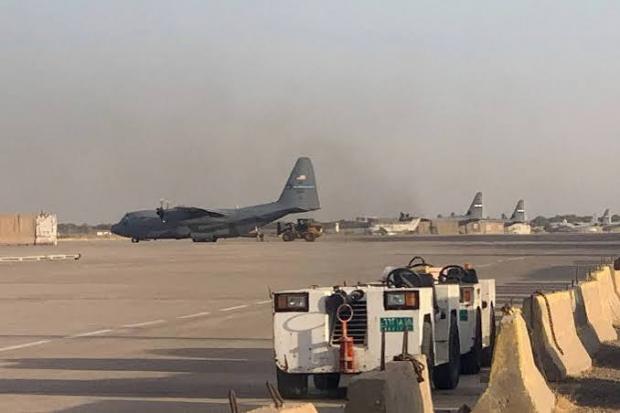
The Wall Street Journal reports U.S. Military Exits Iraq, Leaving Behind a Nation in Peril
After spending more than 23 years and $1.7 trillion, America is winding down what critics have called its forever war in Iraq, closing the last major U.S. military base on Wednesday.
"We don't think we need the military there anymore," President Trump said during a White House visit by Iraqi Prime Minister Ali al-Zaidi in July. "We have a fantastic champion, a new champion," the president said. "He's young, and he's handsome."
Zaidi, a 41-year-old businessman, sat beside Trump during the visit and announced a deadline, also set for Wednesday, for Iranian-backed militias to hand over their weapons. "There is no justification for their existence after the 30th of September," he said.
Instead, America's open-ended war with Iran is pushing Iraq deeper into conflict, with the U.S. exit leaving behind a country where well-armed militias are only tightening their grip. Militants and Iranian forces launched more than 600 attacks on U.S. diplomatic and military facilities in Iraq in the first two months of the war, The Wall Street Journal reported.
In a sign of Iraq's instability, the U.S. Embassy in Baghdad now sends frequent security warnings to individual Americans and others. About two a week regard kidnapping by militants. A team from the Journal abruptly left Baghdad this month after Iraqi, U.S. and European officials warned of a security threat that American officials later said was a kidnapping risk by a Shiite militia.
Zaidi, who never held public office before becoming prime minister in May, has been embraced by the Trump administration as someone they can do business with. He owns a bank, an insurance company and media and construction firms. His bank was banned by the Treasury Department from dollar transactions in 2024 over suspicions it helped finance Iran and its proxies. Zaidi denied knowing about such transactions. Former U.S. officials said they didn't believe he had any personal involvement.
The Trump administration is counting on Zaidi to disarm the militants, which number in the tens of thousands and include paramilitary groups that receive funding or weapons from Iran.
Others scoffed at the idea. "These weapons are for our sovereignty, our freedom," said Kazem al-Fartousi, a spokesman for Kata'ib Sayyid Al-Shuhada, a paramilitary group the U.S. designated as a terrorist organization, funded and armed by Iran.
A forced disarmament by the government "will not happen," he said in an interview in Baghdad. His group and other militias hold top positions in ministries, as well as dozens of seats in Iraq's parliament where they played a role in Zaidi's selection in the negotiations that followed last year's election.