










Breaking News
 The Next Five Weeks
 Russia Tells Businesses to Defend Themselves from Ukraine's Drones
 US to Exit Iraq After Wasting 1.7 Trillion Over 23 Years
 America's Clean Car Retreat Is Complete. The World Will Move On Without Us
Top Tech News
 Elon Musk's Next-Gen Motor Destroy Entire EV Industry
 China's disputed satellite refueling heralds new space war era
 BYD Will Put Solid-State Batteries In An EV Next Year: Executive
 FDA-cleared exoskeleton puts spinal-cord patients back on their feet
 Your Robotic Vacuum Is Watching You -- Could It Someday Testify Against You in Court?
 Why Unigrid's Sodium-Ion Batteries Are the Game-Changer for Off-Grid Energy Storage
 This Battery On Wheels Makes Any Diesel Truck Electric In 5 Minutes
 Mass-Production of AI Infrastructure – Speed Up by 10X
 3D-printed Martian mud homes look critical for life beyond Earth
 Inside The Texas Factory Racing To Break China's Grip On EV Magnets



America's Clean Car Retreat Is Complete. The World Will Move On Without Us
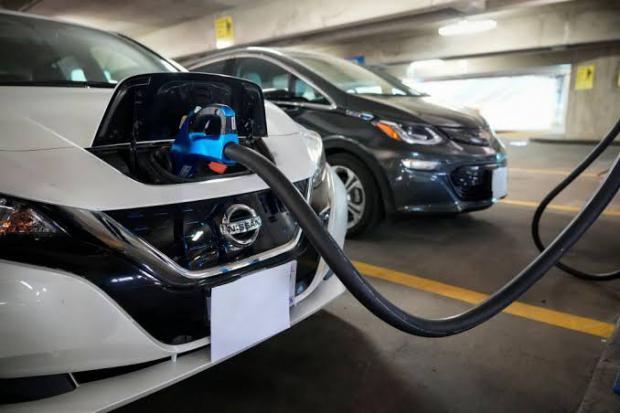
The Trump administration dramatically rolled back fuel economy standards on Monday, easing Biden-era requirements that were pushing automakers towards selling more EVs. It solidifies a two-track path to the future, where Europe and China aggressively electrify, while America joins Japan and some developing markets in staying hooked on gas.
All of this was avoidable. None of it is surprising. And it leaves big, big question marks about whether American firms can stay relevant globally.
What Changed
For the past decade, regulators in the U.S., Europe, China, Japan, and Korea have steadily tightened fuel economy and emissions requirements, often alongside incentives for zero-emissions vehicles. All of the major auto markets seemed to recognize the importance of decarbonizing and decreasing our reliance on fossil fuels.
In the U.S., this never meant a "mandate" for automakers to primarily sell battery-powered cars. But it did involve high enough fuel economy standards that, for most manufacturers, selling EVs or other zero-emissions vehicles seemed to be the only way to hit them. A slew of federal incentives for clean vehicle factories and point-of-sale incentives for consumers further pushed the market in that direction.
At the same time, California had even stricter rules. The state received a waiver from the federal government to set its own, stricter standards back in the 1970s and had ratcheted up the pressure since. While there was never a federal "EV mandate," as Trump likes to claim, California required automakers to offer zero-emissions vehicles and increase sales over time. The state enacted legislation to require all new vehicles to be zero-emissions by 2035. Since 17 states and the District of Columbia follow California's rules, this was a big deal. But the Republican-controlled Congress and Trump administration revoked California's waiver to set its own rules last year, killing America's strictest standards.
They have also axed the federal tax credit and federal grants for clean manufacturing projects. Earlier this year, Trump's Environmental Protection Agency eliminated greenhouse-gas emissions rules for tailpipes, dealing another blow to the clean-car transition.
Until today, another big piece of U.S. vehicle regulation remained, on paper at least. The Corporate Average Fuel Economy (CAFE) standards set increasingly tight fuel economy standards on a fleet-wide basis. The rules approved under the Biden administration set the goal at 50 miles per gallon fleet-wide by 2031, a threshold that would be tough to hit without leaning on EVs. But the revised rules set the target at 34.5 mpg, which is lower than the 2016 requirements.
Today's rollback is largely symbolic; Congress already took the teeth out of the CAFE rules last summer when it reduced the penalty to automakers for missing the targets to zero.