










Breaking News
 Diesel Is the Pretext...
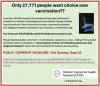 Your Opportunity to Weigh In on Federal Vaccine Policy - Deadline Sunday Sept 20
 Palantir $PLTR CEO Alex Karp says "AI companies have to be nationalized"
 It's infuriating that they know better, but sell us out until they leave
Top Tech News
 World's smallest CT scanner fits in the palm of your hand
 The Tesla Roadster will blow people's minds
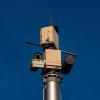 Peter Thiel-Funded Company Anduril to Triple the Number of Autonomous Surveillance Towers...
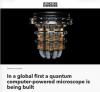 Quantum computing may soon become part of the microscope itself.
 Volkswagen Just Unveiled The Most Efficient EV Ever Tested
 NASA Super Light Solar Sail Project Will Be 12-40 Times Lighter and Faster
 Space Telescope Interferometer to Image Exoplanet Continents
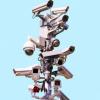 Twenty-five years of "temporary": how 9/11 built a surveillance state Americans never vote
 I'll Never Buy Another WALMART Battery!
 Shoei GT-Air 3 Smart helmet drops with built-in AR for $1,500



Diesel Is the Pretext...
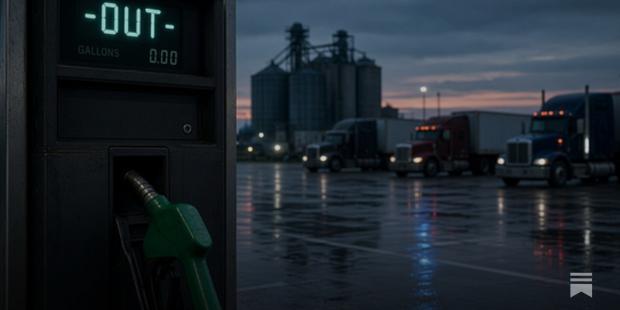
After the closure of the Strait of Hormuz, they came out of the woodwork:
• The IEA declared an energy crisis, issuing "Lockdown"-like policy recommendations including limiting access to roads by license plate, rationing of fuels and limiting use of heating and A/C. They even stood up a Crisis Response Tracker website to track which countries had implemented these measures on a scoreboard.
• The WEF and UN's FAO declared a food crisis, issuing policy recommendations including drone/AI surveillance of farmland and the use of gene-edited crops. The EU swiftly de-regulated these.
• The UN also declared water bankruptcy —"not just a crisis"—stating that it is time to restructure existing water rights and enforce limits on usage. I wrote that up here and described the plan to tokenize it here.
Over the past months, as I covered the unveiling of these plans, the world ate through the 400 million barrels of reserves the IEA "suggested" be released to kick the can down the road. Trump declared "the strait is open!" and the algorithms traded the headlines, suppressing actual price discovery, and precluding any natural demand destruction in the market. Experts warned of shortfalls in diesel refining capacity, lubricant shortages, fertilizer production stoppages for both phosphorus (due to insufficient sulfur) and urea (due to insufficient LNG), helium for the semiconductor fabs, plastics for medical supplies and moving grain…and so on. All of it was right there in the data.
Yet life went on, because the tanks weren't yet empty.
In this strange, liminal space between the announcement and the consequences, many were lulled back into normalcy bias—if they had even glanced up at all.
But now, suddenly, it hurts. Diesel is at record highs, and the machine is starting to throw sparks as various gears grind to a halt. The energy crisis is indeed becoming a food crisis, as the WEF & UN promised (and as I've been covering).
As folks start to cry out, and the political willpower is manufactured, those policy recommendations from the spring will be pulled off the shelf.
And humanity will be forever redefined.
Not with some grandiose announcement or branded campaign, but by a much quieter, more insidious change in the way we relate to the world. We will no longer be free to consume energy, food, or water. We will instead henceforth request permission from the technocrats.
The natural order is being inverted. The technocrats are attempting to insert themselves as the sovereigns: between us and the living world. Between us and God. A family can no longer thrive off the abundance of nature; we are now restricted to what their system will afford us. That is the point of the Digital IDs rapidly rolling out and of tokenization: you do not own the land, the house, or the well. You hold a claim in their system … until their ledger says otherwise.
Meanwhile, the AI fear campaign sets the stage for a similar takeover of the next layer: compute. AI will be called too dangerous for ordinary hands. Groups (including the WEF) are already calling for use of computation itself to be registered, capped, and tied to an identity — I describe this here. You will not only request permission to eat, drink, and drive, but even to think at machine scale.
Yes, diesel prices are painfully high. That's causing folks to look around. The stakes, though, are much higher.
The window to notice this is closing. Game on, humanity!