










Breaking News
 Report: US Ramps Up Intelligence, Targeting Support for Saudi Arabia's War in Yemen
 ALLISON INQUIRY BOMBSHELL
 In 2013, Robert Downey Jr. invested USD 13.4 million to create a futuristic dome house...
 THE UNDERSEA TEST
Top Tech News
 NASA Super Light Solar Sail Project Will Be 12-40 Times Lighter and Faster
 Space Telescope Interferometer to Image Exoplanet Continents
 Twenty-five years of "temporary": how 9/11 built a surveillance state Americans never vote
 I'll Never Buy Another WALMART Battery!
 Shoei GT-Air 3 Smart helmet drops with built-in AR for $1,500
 Freezable titanium plate keeps your cooler chilled way longer than ice packs
 Review: Affordable thermal device is made for discovering life outdoors
 AI Whistleblower Tells Tucker How AI Could Kill All Humans by 2040
 You Hate Flock? Well There's More...
 Will Spiking Diesel Prices Drive Autonomous Trucking?



THE UNDERSEA TEST
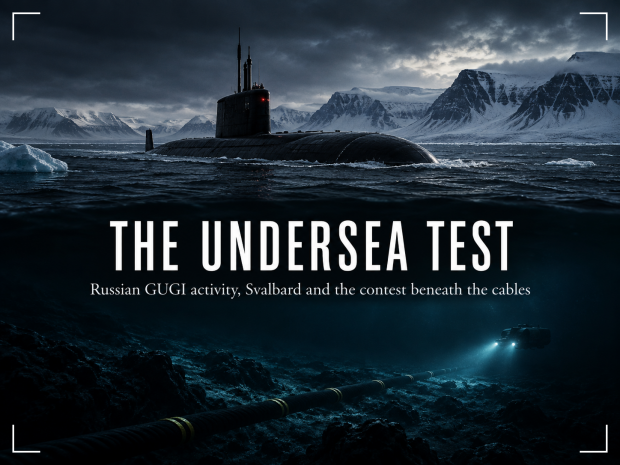
The operation is established. The location and technology are not independently corroborated.
Why This Story
Almost everything a modern society depends on now runs, at some point, along the seabed: the data traffic of whole economies, the messaging that moves money between banks, and the control links for the satellites that handle navigation, weather and surveillance. That undersea infrastructure is largely unguarded, hard to monitor and easy to damage — and over the past few years it has quietly become one of the most active frontiers of confrontation between NATO and Russia.
That is why Crosswise chose this episode, because two stories are tangled together in it and they belong in very different categories of certainty: one is firmly established on the public record, while the other is dramatic, consequential and, for now, single-source intelligence reporting. Keeping the two apart is not pedantry; it is the difference between understanding what happened and repeating what someone would like us to believe happened.