










Breaking News
 this is it, its happening
 Why Do Good Things Happen to Bad People?
 The Student Loan Crisis Is Exploding
 The Same Zionist Jews Who Run Israel Run Washington and They Attack the Same Civilian...
Top Tech News
 Idaho's High Desert Becomes Hot Spot For Nuclear Power Revolution
 The World's Largest Electric Aircraft Is About to Take Its First Flight
 Tesla Cybercabs and Superchargers Will Act as Mini Cell Towers for SpaceX Starlink
 Elon Vows AI-Made 'Odyssey' After Blasting Nolan's Take On Homer
 Anthropic is launching its own drug discovery programs for rare diseases using Claude...
 SpaceX AI Satellites Will Have 250 Kilowatts of Power
 Chinese researchers have developed a sodium-metal battery that can fully charge in just 4 minutes...
 SpaceX Starship Flight 13 in 3 Days - Thursday July 13
 Chinese Scientists Develop Nuclear Battery Using Carbon-14
 Teleoperated humanoid robots complete first-ever live surgery



Why Do Good Things Happen to Bad People?
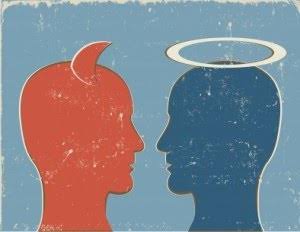
Arecent conversation with a friend at a concert in Canada brought an old question back to mind. The two performers—British singer Billy Bragg and the American band Social Distortion—did not wait long before criticizing the "big bad orange man" and some of his administration's policies, seemingly eager to display their moral purity through a little virtue signaling. Their confidence in identifying the bad people and, by implication, placing themselves among the good, reminded me of how easily we divide the world into morally simple categories.
Years ago, during a conversation with my parents, my mother asked a question that has stayed with me ever since: "Why do good things happen to bad people?"
It is obviously the reverse of the more familiar question "Why do bad things happen to good people?"—a question that is typically posed in conjunction with a theodicy of sorts. It is usually treated as a personal form of the problem of evil; that is, if God is good, holy, and just, why do innocent or morally upright people suffer?
But the inversion of this standard theological question also matters, especially when evil has become so vividly real and brought to the fore in recent years. All one has to do is think of the Covid debacle; the targeting of innocent children with the trans ideology; the insidiousness of the medical assistance in dying (MAiD) program, which Canada is a world leader in per capita; and the information contained in the Epstein files, to name a few. Now, reflecting further, if God is just, why do so many dishonest, cruel, selfish, or corrupt people often enjoy wealth, health, influence, pleasure, and success?
But before continuing this reflection, we should notice a hidden presumption within both questions. The person asking may assume that he/she belongs among the "good" and that God has not shown him/her enough favor, while others, who are less deserving according to them, seem to receive more. I believe such reasoning is a spiritual and theological misstep. St. Paul reminds us that "all have sinned and fall short of the glory of God" (Romans 3:23). Christianity does not segregate humanity neatly into two categories between those who deserve blessings and wicked people who deserve only punishment. We all depend upon God's mercy and grace. We also do not fully understand God's designs; for, as Isaiah reminds us, "my ways [are] higher than your ways and my thoughts than your thoughts" (Isaiah 55:8-9).
Jesus also makes a similar point in the parable of the Pharisee and the tax collector. The Pharisee praises and thanks God for not being like other sinners, while the tax collector readily recognizes his need for God's mercy. For Jesus, it is the humble tax collector who is justified before God (Luke 18:9-14). This is why we should approach this question with care and trepidation, despite all of our indignation toward the world. Although it is prudent to question why evil appears to prosper, it is dangerous to assume that we ourselves are entitled to greater worldly blessings.