










Breaking News
 Joe Rogan Experience #2544 - Chris Williamson
 Trump Ushers in 300,000 Tons of Foreign Mystery Meat and Sends American Farmers Into Bankruptcy
 UPDATE: Rent Control Fails Again, Politicians Learn Nothing
 War has restarted in Iran...Oil prices are spiking...Bond market is in trouble...
Top Tech News
 Here's What to Expect as Air Taxis Actually Begin to Take Off
 'Wood Foam' Startup Uses Logging Waste as Substitute for Plastic, Producing 400 Pounds Daily
 How a Group of Young Men in 1933 Solved a Water Crisis in The Desert -- And Nobody Knows About It
 This American Battery Could Break China's Grip On The EV Supply Chain
 Tesla's Cybercab Launch Is Next Week. Here's What Tesla Still Needs To Prove
 800-passenger commercial plane boldly reinvents how we will fly
 Does Ultra-Fast Charging Ruin An EV Battery? BYD Did It 350 Times In 9 Days To Find Out
 Singapore is experimenting with biological computing using living human neurons...
 It's Happening - Europe is Building an Impossible Fusion Reactor
 Portable 1MW Kaleidos Microreactor Secures Critical Nuclear Fuel Deal Through 2030s



Anthropic is launching its own drug discovery programs for rare diseases using Claude...
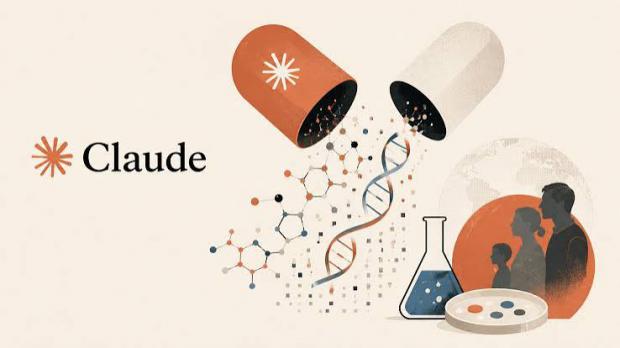
The news landed like a thunderclap in a San Francisco conference room on June 30, 2026. Anthropic, the artificial intelligence company behind the cutting-edge Claude model, announced it will launch its own preclinical drug-discovery programs targeting neglected diseases, including rare conditions, while simultaneously unveiling Claude Science, an AI workbench built for researchers and drug-makers.
This development could become a direct challenge to the pharmaceutical establishment, a sector that has spent decades perfecting the art of maximizing profit margins while leaving millions of patients with rare and overlooked conditions to suffer in silence. If we're betting on humanity's best intentions, Anthropic is in a position to unleash super-intelligence that could upend decades of corporate greed and Big Pharma's exploitation of human patients. But the super-intelligence could go both ways and be leveraged by Big Pharma to continue making customers for life. The deeper question remains: Will this super-intelligence be used to genuinely heal, or will it become the most sophisticated tool yet for manufacturing lifelong customers?
Key points:
Anthropic will run its own preclinical drug programs for neglected and rare diseases, targeting conditions that are ignored for economic reasons.
The company launched Claude Science, an AI workbench for researchers, on June 30, 2026, at a San Francisco event.
Eric Kauderer-Abrams, Anthropic's head of life sciences, stated the company needs to "live it along with all of you" to build the right tools.
Rare diseases offer clearer biological targets, often stemming from single damaged genes, making them more amenable to AI-driven solutions.
Anthropic acquired Coefficient Bio for $400 million and placed Novartis CEO Vas Narasimhan on its board, signaling deep industry entanglement.
The dual-agent approach used in tools like Cursor Code demonstrates AI's growing capacity for complex, multi-step tasks like drug discovery.
The hard truth about why your disease gets ignored
To understand what Anthropic is really doing, you must first understand the brutal economics that dictate which diseases get researched and which get abandoned. Major pharmaceutical companies operate on a simple calculus. Developing a single drug can cost anywhere from $1 billion to $2.6 billion when factoring in the cost of failed trials. The process takes ten to fifteen years. And even then, the Food and Drug Administration approves only about ten percent of drugs that enter human trials. For a company like Pfizer or Merck, investing that kind of money into a condition that affects 10,000 people worldwide is financial suicide. The math simply does not work.
This is why thousands of rare diseases have no approved treatments at all. According to the National Institutes of Health, there are more than 7,000 known rare diseases, and approximately 95 percent of them lack any FDA-approved therapy. Patients are told to manage symptoms, to hope, to wait. Behind closed doors, executives admit the truth. The return on investment is too low. The patient populations are too small. The Wall Street analysts would revolt.
Anthropic's Jonah Cool, the head of life sciences partnerships and deployment, put it bluntly when speaking to STAT. "These are areas that normal drug development economics don't incentivize or favor." He added, "The idea here is that the biology is often clear; the economics, if you're trying to run a drug development business, are challenging." People are dying, suffering, and deteriorating because the profit motive has failed them. Utilizing super-intelligence, drug researchers could find solutions that don't depend on these profit motives.