










Breaking News
 Gov Beshear Calls on McConnell to "Directly and Verbally Address the People of Kentucky"..
 Tech and the Vote to Intent Ratio
 New Biden Tapes Reveal Hur's "Well-Meaning Elderly Man" Had An $8 Million Motive...
 Houthis Fire On Saudi Vessel, More Ships Make U-Turns, After 'MoU Revival' Hype Returns
Top Tech News
 Elon Vows AI-Made 'Odyssey' After Blasting Nolan's Take On Homer
 Anthropic is launching its own drug discovery programs for rare diseases using Claude...
 SpaceX AI Satellites Will Have 250 Kilowatts of Power
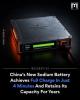 Chinese researchers have developed a sodium-metal battery that can fully charge in just 4 minutes...
 SpaceX Starship Flight 13 in 3 Days - Thursday July 13
 Chinese Scientists Develop Nuclear Battery Using Carbon-14
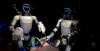 Teleoperated humanoid robots complete first-ever live surgery
 Floating capsule auto-disinfects water without chemicals or battery
 Modular Reactors To Solve Data Center Hysteria?
 DeepSeek Developing In-House AI Chip In Bid To Cut Nvidia Reliance



Tech and the Vote to Intent Ratio
The vote to intent ratio is the proportion of total intentional government action that is driven by any voter filling their proportionate share of total government action. If the government can be crassly compared to a corporation, each citizen within that government would be a shareholder with an equal share of equity in the state. While the state is operated from revenue derived from citizens in their role as customers, their separate role as voters connotes some level of directional control. Each citizen is allocated an equal share of government action that they are ideally allotted, and appointed officials within agencies are generously assumed to be downstream of candidates that citizens voted for. If every government action could be clearly linked back to some form of citizen consent given in vote, there would be an extremely high vote to intent ratio. Interestingly, a direct democracy governed by majority vote would not have the highest vote to intent ratio. If 51% of the population wanted something and could erase the effective power of the other 49% of the vote, then at maximum the vote to intent ratio could be 51%. A dictatorship would fail even more dramatically, as only the intent of one citizen would be represented in governmental action. The dictator would maximize their rightful share as one of many millions of citizens, but no other citizen would exercise any of their share leading to an abysmally low vote to intent ratio. Some form of mediated democratic government would get the highest vote to intent ratio in most situations, as it still allows for some amount of the people's vote while not letting 51% maximize their share to the detriment of the other 49%. Although unorthodox, the vote to intent ratio gets to the heart of an important question: how much of government action is being directed by the people that the government is supposed to serve.
Whenever a politician is elected, the people believe that they at least have a better chance of serving their interests than the alternative candidate. The politician implicitly has some vision of the world that the people value. This vision is ideally supposed to lead to actions that the person who voted would generally approve of. While this is an imperfect system, every person believes that the politician they know will in some way intentionally guide government action in a way they agree with. Although each representative does not perfectly represent the voice of the people that elected them, the vote to intent ratio increases if the representative faithfully follows the wishes of those who elected them.