










Breaking News
 US Senate Passes Housing Bill With Four-Year Fed CBDC Ban
 "It's That Bad": Virginia Residents Battling Constant Noise From Data Center Generator
 'Groundbreaking' Potential Lupus Cure Sends Patients into Remission, Allowing Dreams...
 Leader of group convicted in antifa-inspired attack on Texas ICE facility handed 100-year prison...
Top Tech News
 Speculations on What Could Show Physics Beyond the Standard Model
 SpaceX Orbital Travel and Orbital Hotels Need Starfall – Getting Back Safe and Cheap is Exciting
 Lizard-inspired wiggly wheels let Mars rover swim through sand
 Fact Sheet: President Donald J. Trump Ushers in the Next Frontier of Quantum Innovation
 Researchers at Johns Hopkins University just let an AI-guided robot remove a dead pig's gallblad
 World's first consumer wing-in-ground effect aircraft takes flight
 America's Military Readiness Depends On Deployable Nuclear Power
 License Plate Cameras Are About To Start Tracking A Lot More Than Just Your Car
 Heads up: Apparently the government is hiding cameras inside fake utility boxes
 Sodium Batteries And EVs That Power The Grid: Inside GM's Big Energy Push



"It's That Bad": Virginia Residents Battling Constant Noise From Data Center Generator
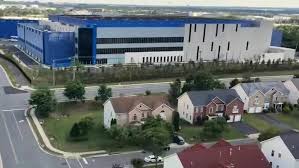
Unlike most data centers connected to the power grid, this facility runs entirely on its own on-site power plant. What residents were told would be temporary generator testing has become permanent operation.
"They're Just Never Turned Off"
Neighbor Hari Doue told News Nation that the community was initially assured the generators were only being tested for emergencies.
"We were told in the beginning that they test the generators to make sure they're working in case of an emergency. And then as the year and the months have gone on, they're just never turned off," Doue said.
Another neighbor, Greg Pirio, has reached out to attorneys over the issue. He described the impact bluntly:
"You just hear this noise, it's just like, you just want to curse, you know, it's that bad."
Some residents have taken drastic steps to cope. One placed a mattress against their window to muffle the sound. Another installed plexiglass and began monitoring decibel levels with a sound meter. Concerns center on sleep disruption, stress, and falling property values.
Vantage Data Centers officials told NewsNation they continue to monitor noise levels and do not believe the sound exceeds Loudoun County's limits – which is 55 decibels in Residential and rural areas and 60 decibels in Mixed-use residential areas. Exceptions include generators operating during emergencies, at utility request, or during testing.
Virginia: America's Data Center Capital
Virginia has the largest concentration of data centers in the United States – 287 operational and 398 prospective, according to Pew Research. Loudoun County has become ground zero for this boom, often called "Data Center Alley."
The economic upside is significant. Data centers generate almost half of Loudoun County's property tax revenues, funding schools and public services while helping keep residential tax rates lower.
However, the facilities consumed approximately 26% of Virginia's total electricity in 2023, contributing to higher energy costs for all residents.
The situation in Sterling reflects a broader national tension. On June 18, 2026, the Federal Energy Regulatory Commission issued show-cause orders requiring major grid operators to justify or update rules for connecting large energy users such as data centers.
President Trump has encouraged data center developers to build dedicated on-site power sources – the exact model used by Vantage in Sterling – to protect regular utility customers from rate hikes.
Residents near the Vantage site acknowledge the benefits of data centers, including jobs, tax revenue, and essential digital infrastructure, but strongly object to their placement directly next to homes.