










Breaking News
 Here is what we know: U.S. taxpayer money, funneled through USAID and NIH,...
 Empire at 250: Can the Principles of 1776 Survive the American Police State?
 The Public Choice Problem of AI Rights
 Greenspan Was The Perfect Fed Chair. That Is Not a Compliment
Top Tech News
 Speculations on What Could Show Physics Beyond the Standard Model
 SpaceX Orbital Travel and Orbital Hotels Need Starfall – Getting Back Safe and Cheap is Exciting
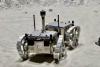 Lizard-inspired wiggly wheels let Mars rover swim through sand
 Fact Sheet: President Donald J. Trump Ushers in the Next Frontier of Quantum Innovation
 Researchers at Johns Hopkins University just let an AI-guided robot remove a dead pig's gallblad
 World's first consumer wing-in-ground effect aircraft takes flight
 America's Military Readiness Depends On Deployable Nuclear Power
 License Plate Cameras Are About To Start Tracking A Lot More Than Just Your Car
 Heads up: Apparently the government is hiding cameras inside fake utility boxes
 Sodium Batteries And EVs That Power The Grid: Inside GM's Big Energy Push



Lizard-inspired wiggly wheels let Mars rover swim through sand
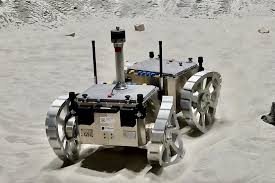
The prototype rover is part of the German Space Agency's VaMEx (Valles Marineris Explorer) program, which is an initiative aimed at developing swarms of driving, walking and flying robots designed to explore Mars' vast Valles Marineris valley.
And yes, the rover does in fact have wheels … but they aren't normal ones.
The sandfish lizard (Scincus scincus) "swims" through the sand by undulating its body from side to side, which is a motion that the University of Würzburg's Prof. Marco Schmidt set out to replicate in the vehicle's unique wheels. Those wheels do still roll, but they also wiggle, for lack of a better word.
Developed in partnership with the University of Bremen, the wheels were originally heavier and narrower than comparable conventional pneumatic wheels. This meant they had an inconvenient tendency to sink into the sand and to slip against it, hampering the rover's movement.
That problem was remedied by making them both lighter and wider, increasing their flotation while also reducing slippage. As a result, when traversing loose sand, the rover ended up outperforming similar vehicles that were equipped with conventional wheels.
Plans now call for further refinements to be made to the wheels, to enhance their performance on mixed terrain.