










Breaking News
 Here is what we know: U.S. taxpayer money, funneled through USAID and NIH,...
 Empire at 250: Can the Principles of 1776 Survive the American Police State?
 The Public Choice Problem of AI Rights
 Greenspan Was The Perfect Fed Chair. That Is Not a Compliment
Top Tech News
 Speculations on What Could Show Physics Beyond the Standard Model
 SpaceX Orbital Travel and Orbital Hotels Need Starfall – Getting Back Safe and Cheap is Exciting
 Lizard-inspired wiggly wheels let Mars rover swim through sand
 Fact Sheet: President Donald J. Trump Ushers in the Next Frontier of Quantum Innovation
 Researchers at Johns Hopkins University just let an AI-guided robot remove a dead pig's gallblad
 World's first consumer wing-in-ground effect aircraft takes flight
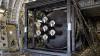 America's Military Readiness Depends On Deployable Nuclear Power
 License Plate Cameras Are About To Start Tracking A Lot More Than Just Your Car
 Heads up: Apparently the government is hiding cameras inside fake utility boxes
 Sodium Batteries And EVs That Power The Grid: Inside GM's Big Energy Push



The Public Choice Problem of AI Rights

And, as a result, so will political conflict over whether artificial systems deserve moral consideration.
To understand why, consider the underlying moral ambiguity. The standard markers of moral standing—the ability to suffer, self-awareness, rationality—are inner features that are not directly observed so much as they are inferred. With our fellow humans we manage to recognize moral standing among our fellow humans tolerably well because we share biology, evolutionary history, and behavioral and expressive cues that we can use, with reasonable reliability, to infer what others are thinking and feeling. With artificial systems we lack much of that and instead are left with behaviors and performance like the appearance of suffering, the appearance of attention, the appearance of inner life, each of which designers are incentivized to optimize.
The implication of this moral ambiguity is that the moral status of artificial systems will likely remain epistemically ambiguous for the foreseeable future, perhaps indefinitely. The relevant philosophy of mind and cognitive science are contested. And even without resolution, we must still make decisions about rights, regulations, legal categories, and the distribution of resources on ambiguous grounds.